How to Remove Mold From Window Sills: Wood, Painted, Plastic and Stone
Key Takeaways
- Sill mold is caused by water sitting on the sill, usually condensation running off the glass.
- White vinegar works on wood, painted, vinyl and tiled sills. Use soapy water on marble and natural stone, because vinegar etches stone.
- Most sill mold hides in the back corners and the joint under the frame. Clean there first.
- Soft, dark or crumbling wood means rot under the mold. Cleaning alone will not fix it.
- Wipe the sill every morning in cold weather and keep humidity between 30% and 50%.
Quick answer: To remove mold from a window sill, wear gloves and a mask, spray white vinegar (or soapy water on stone and unsealed wood) onto the sill, leave it for 10 to 60 minutes, then scrub with a soft brush, wipe with a damp cloth and dry the sill completely. Check the back corners and the joint under the frame, where most sill mold hides. Then stop the water: wipe condensation every morning and lower indoor humidity.
The window sill is the place in your home where window mold does the most damage. Every drop of condensation that forms on the glass overnight runs down and sits on the sill until it evaporates. On a cold morning that can be a puddle. Do that night after night and the sill grows black spots, the paint blisters, and wooden sills start to soften.
This guide covers sill mold specifically: how to clean it off every sill material, how to deal with black mold, stains and mold underneath the sill, and how to keep the sill dry so it does not come back. For the whole window, including glass, tracks and seals, see our main guide on how to remove mold from windows.
What Is the Mold on Your Window Sill?
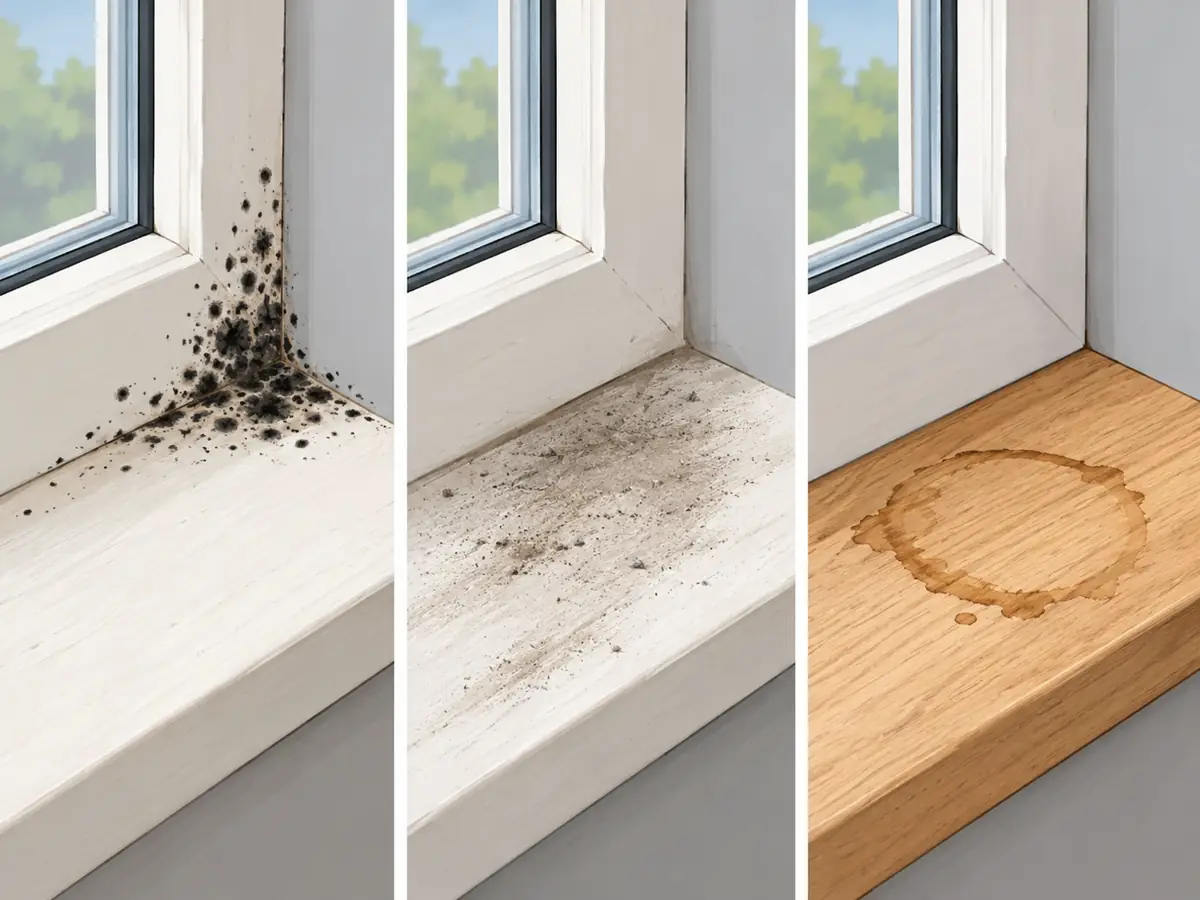
Black, grey or green spots on a sill are almost always mold. Flat, white or grey powdery growth is usually mildew, an early stage that wipes off easily. Both are cleaned the same way.
Before you start, rule out dirt and water stains:
- Dirt smears when you wipe it dry and does not return in the same spots.
- Water stains on wood are brown or grey rings that do not wipe off at all, even when wet.
- Mold sits in spots or clusters, often in the corners, and comes back in the same places after cleaning.
A musty smell near the window is a strong sign that some of the mold is somewhere you cannot see, such as under the sill or behind the trim.
Is Mold on a Window Sill Dangerous?

Mold on window sills is very common, especially in winter, and it is one of the most searched mold questions. Small patches of surface mold are a low risk for most healthy adults if you clean them promptly. The CDC notes that mold can cause stuffy noses, coughing, wheezing and itchy eyes or skin, with stronger reactions in people with asthma, allergies or weakened immune systems.
The color does not tell you how dangerous it is. Most black mold on window sills is a common indoor mold, not the Stachybotrys often called “toxic black mold”. Treat all sill mold the same: protect yourself, clean it off, and fix the moisture.
Get professional help if the moldy area is more than about 10 square feet, the sill is rotting, or the mold is spreading into the wall below.
What You Need

- Rubber or nitrile gloves, safety glasses and an N95 mask
- Spray bottle
- White vinegar, mild dish soap, or 3% hydrogen peroxide
- Microfiber cloths and paper towels
- Soft toothbrush and a soft scrubbing brush
- Plastic putty knife or old plastic card
- Screwdriver (to test for rot)
- Old towel and a plastic bag for used cloths
How to Remove Mold From Window Sills: Step by Step
Step 1: Identify your sill material

Your sill material decides the cleaner. Most indoor sills are painted wood, varnished or stained wood, MDF, vinyl or uPVC, tile, or natural stone such as marble or granite. Stone feels cold and heavy and has natural veining. MDF is usually painted and swells into a soft, rough edge when it gets wet.
Step 2: Check for rot and hidden mold
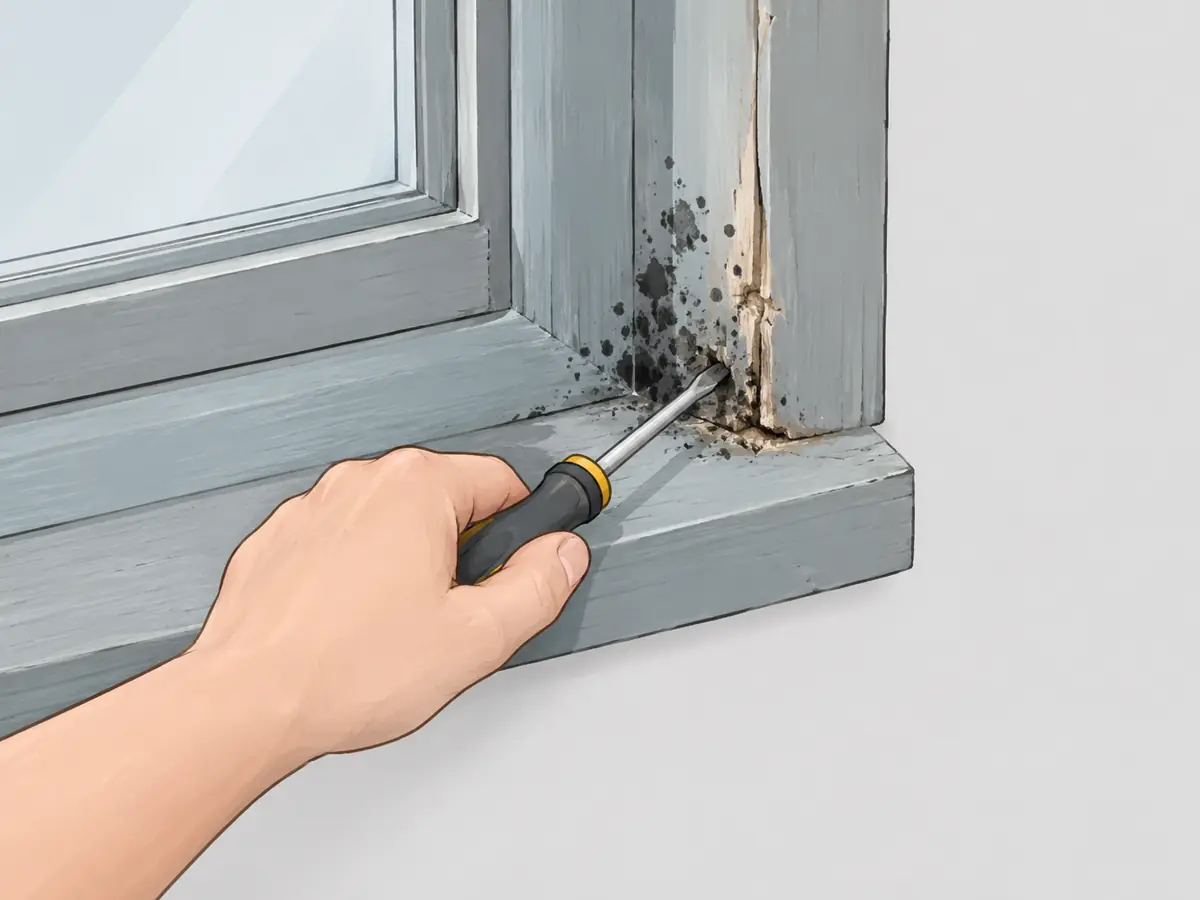
Press the sill gently with a screwdriver tip, especially at the back corners and along the front edge. If the tip sinks in or the wood feels spongy, there is rot under the mold. Look under the front lip of the sill and at the joint where the sill meets the wall below. Dark staining there means water is getting under the sill.
Step 3: Protect yourself and the room
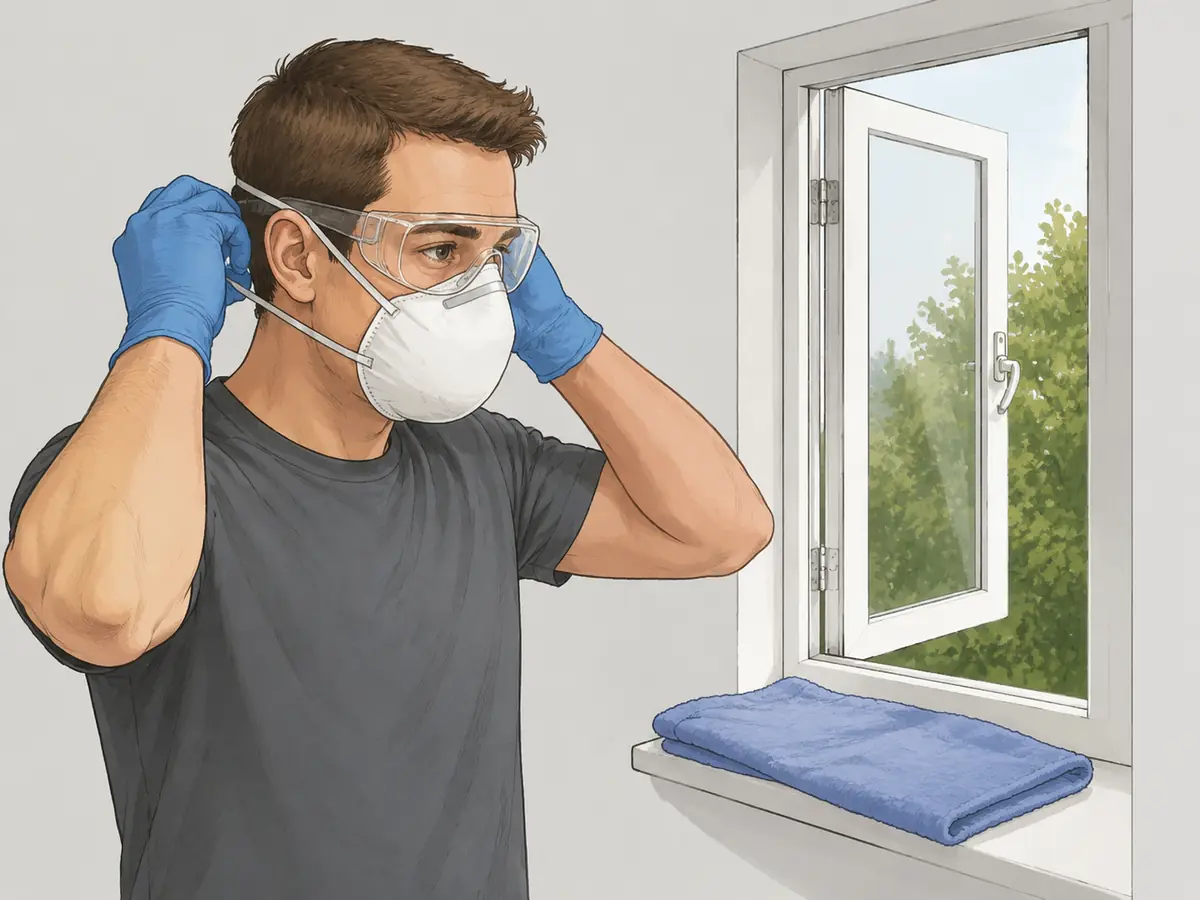
Put on gloves, glasses and an N95 mask. Open the window if the weather allows, and close the door to the rest of the house. Move plants and ornaments off the sill, and lay a towel on the floor below. Never dry brush mold, because it throws spores into the air.
Step 4: Spray and let it work
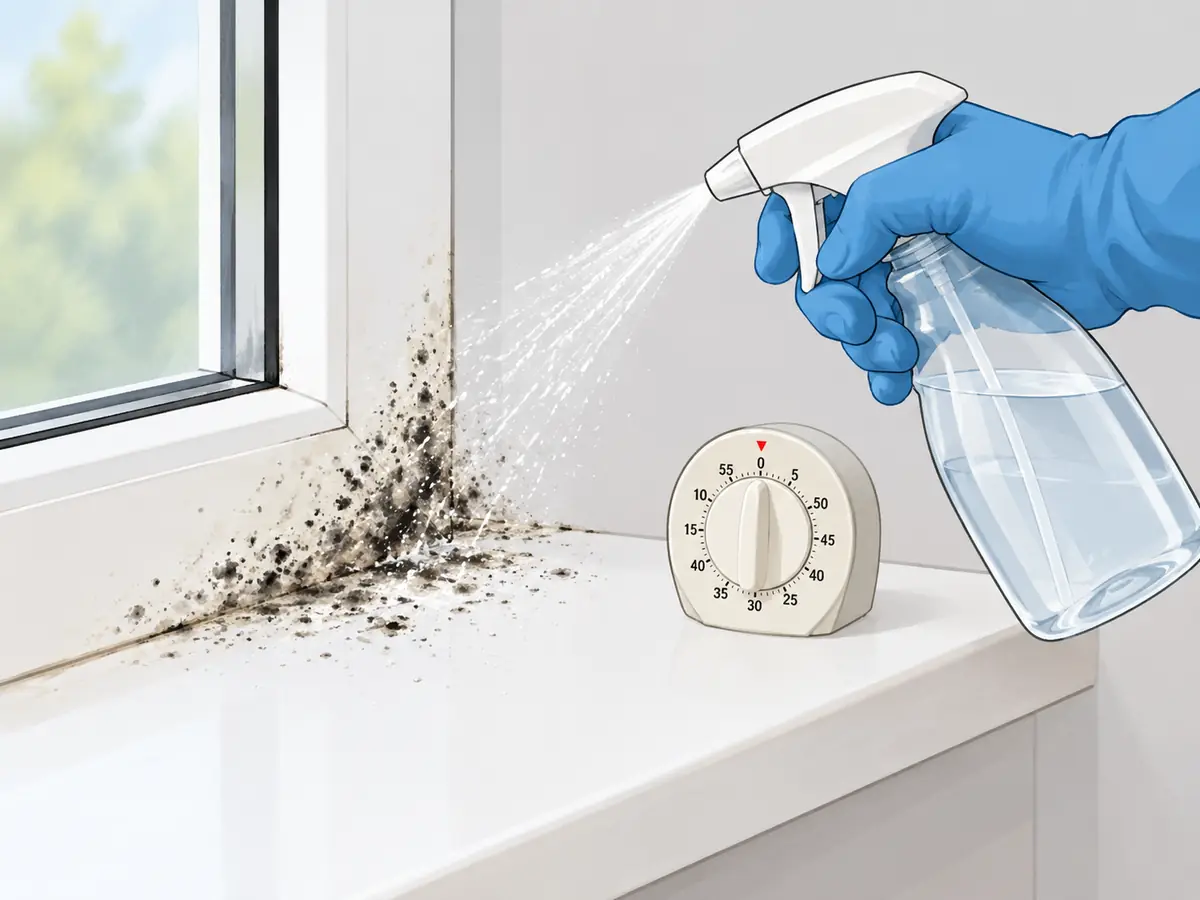
Spray your chosen cleaner onto the moldy area until it is damp but not pooling.
- Vinegar: undiluted, or 4 parts vinegar to 1 part water. Leave for 30 to 60 minutes on heavy mold.
- Soapy water: a few drops of dish soap in warm water. Leave for 5 to 10 minutes.
- Hydrogen peroxide (3%): leave for 10 minutes until it stops fizzing.
On wooden and MDF sills, spray onto a cloth instead and keep the sill damp rather than wet.
Step 5: Scrub the corners and the frame joint
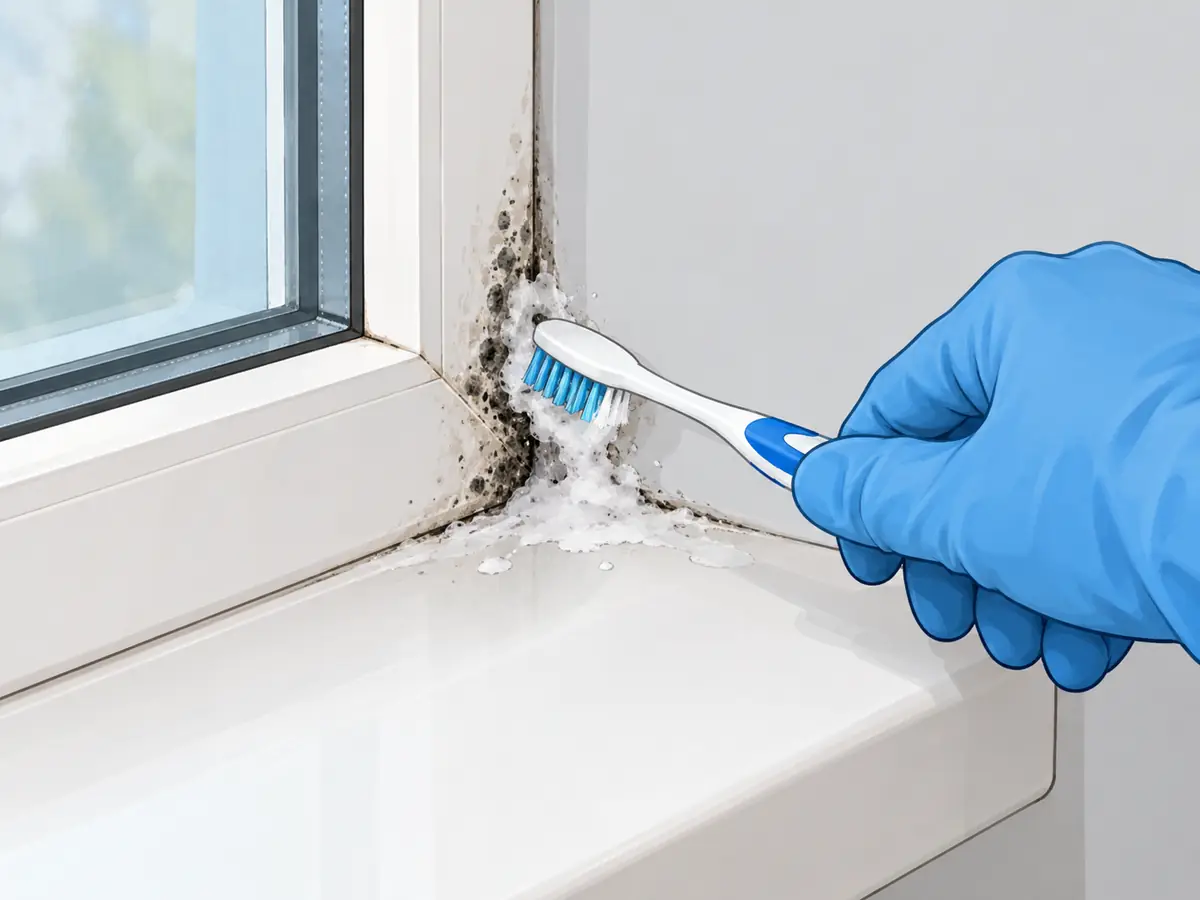
Scrub with a soft brush in small circles. Use a toothbrush in the back corners and along the line where the sill meets the window frame. Wrap a cloth around a plastic putty knife to reach into the joint. Work from the edge of each patch toward the middle so you do not spread it.
Step 6: Wipe and rinse
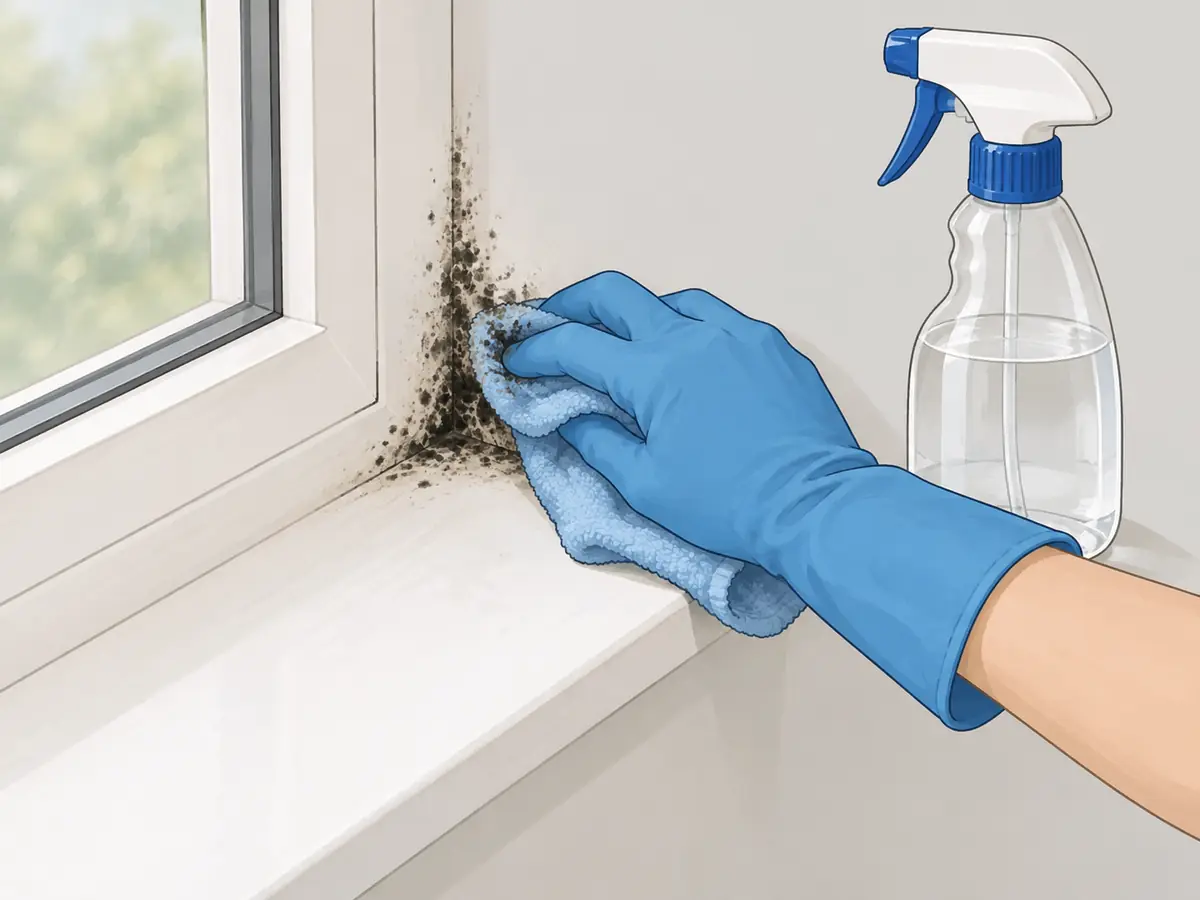
Wipe the loosened mold away with a damp microfiber cloth, folding it to a clean side after every pass. Wipe again with a cloth dampened in clean water to remove residue. Skip the rinse for vinegar if you like; it evaporates.
Step 7: Dry the sill completely
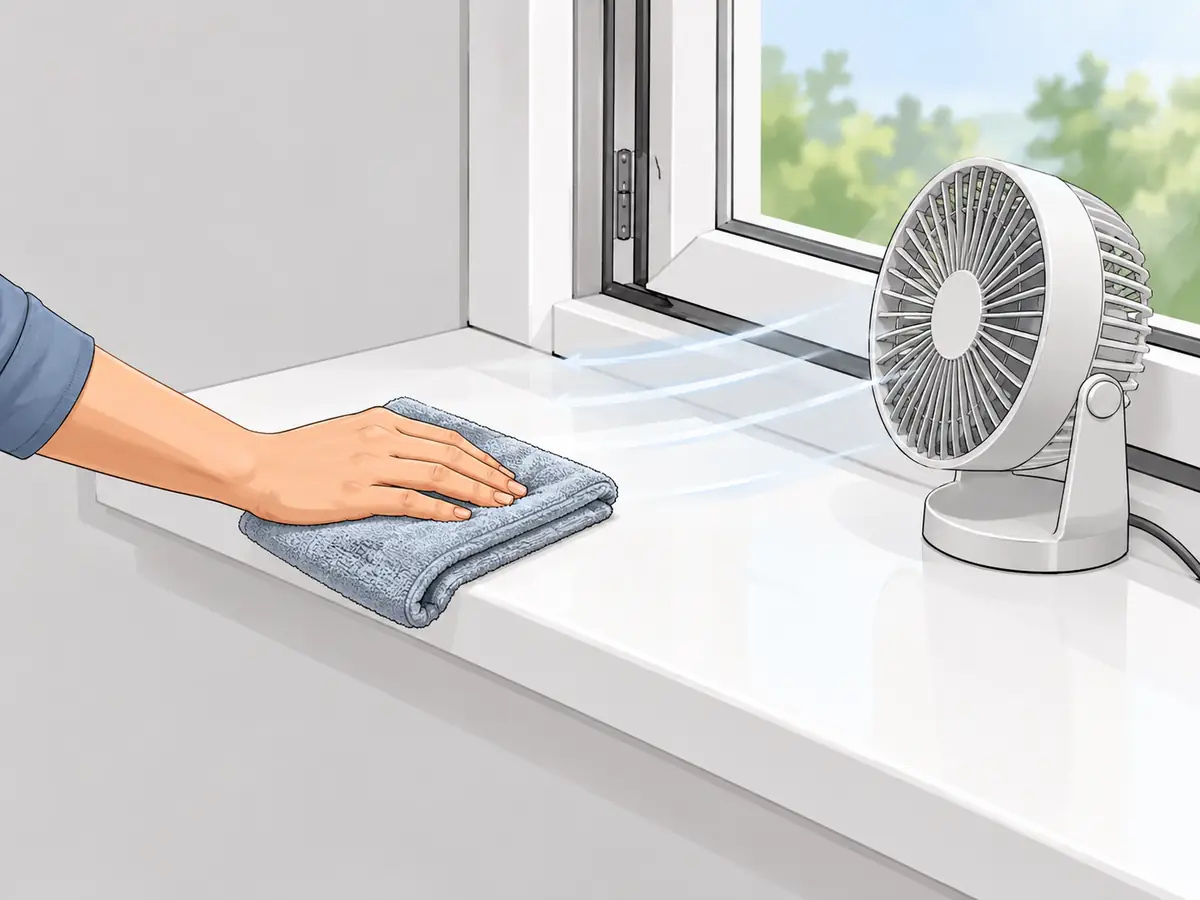
Dry every surface with a dry cloth or paper towels, including under the front lip. Leave the window open or point a fan at the sill for at least an hour. Wooden sills must be fully dry before you repaint, reseal or put anything back on them. Bag the used cloths and bin them.
Which Cleaner Is Best for Each Window Sill?

| Sill material | Best cleaner | Avoid |
|---|---|---|
| Painted wood or MDF | Mild dish soap, or diluted vinegar on a cloth | Soaking, harsh scrubbing, rubbing alcohol (it softens some paints) |
| Varnished or stained wood | Vinegar on a cloth, then dry | Bleach (discolors wood), soaking |
| Bare or worn wood | Vinegar or 3% peroxide, light sanding for deep stains | Bleach, leaving it wet |
| Vinyl or uPVC | Vinegar, soapy water, 3% peroxide | Abrasive pads, solvents |
| Tile and grout | Vinegar or peroxide with a toothbrush | Bleach on colored grout |
| Marble, limestone, travertine | Mild dish soap or a stone-safe cleaner | Vinegar, lemon, bleach, any acid |
| Granite or quartz | Mild dish soap | Acidic cleaners on sealed finishes |
How to clean mold off window sills with vinegar
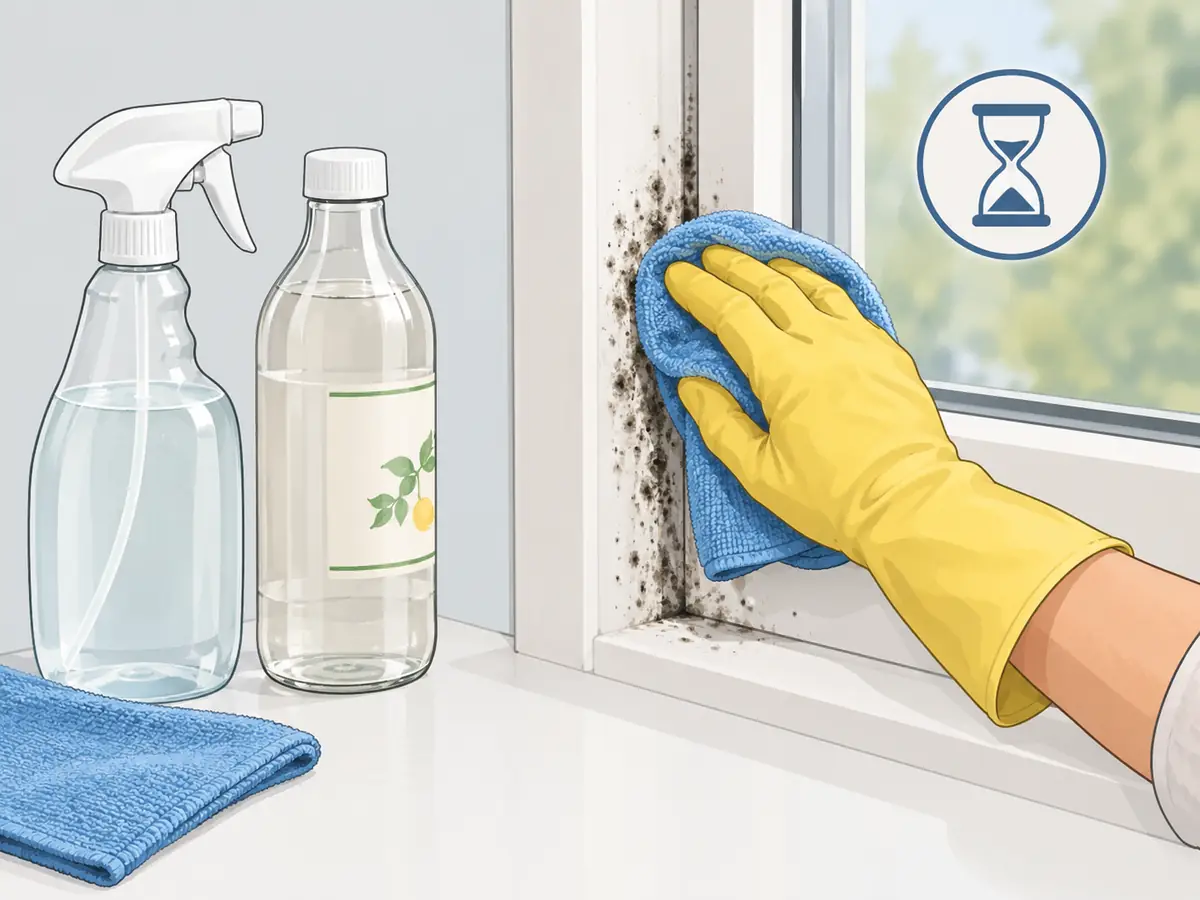
White vinegar is the most popular way to clean mold off window sills, and it works well on wood, painted, vinyl and tiled sills. Spray it on undiluted or 4 to 1 with water, leave it for up to an hour, scrub, wipe and dry. Some people add a paste of baking soda and water for stubborn spots; scrub it in gently and rinse well. Never use vinegar on marble, limestone or travertine.
How to clean mold off window sills without bleach
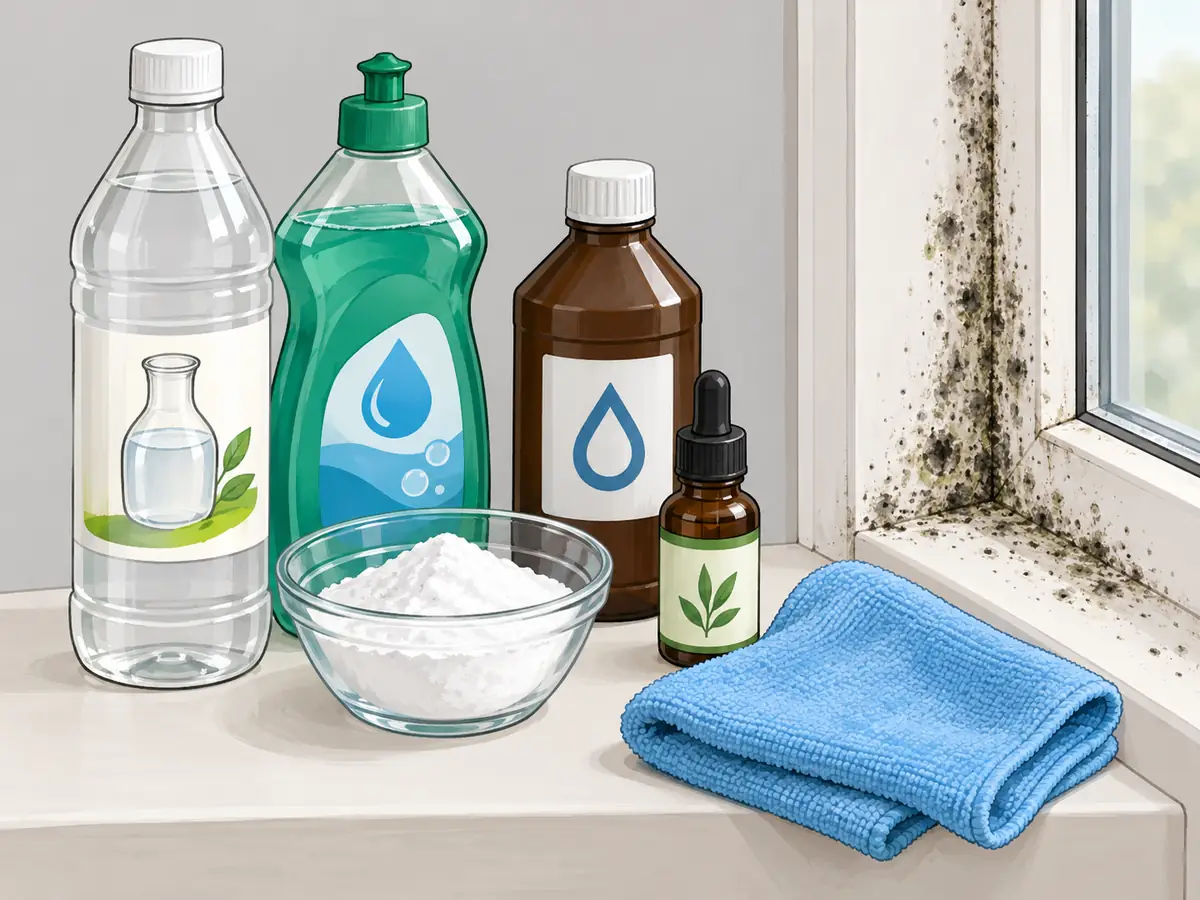
Vinegar, soapy water and 3% hydrogen peroxide all remove sill mold without bleach. That matters on sills, because bleach discolors wood, can strip paint, and does not soak into porous material, so mold under the surface survives.
Should you use bleach on a window sill?
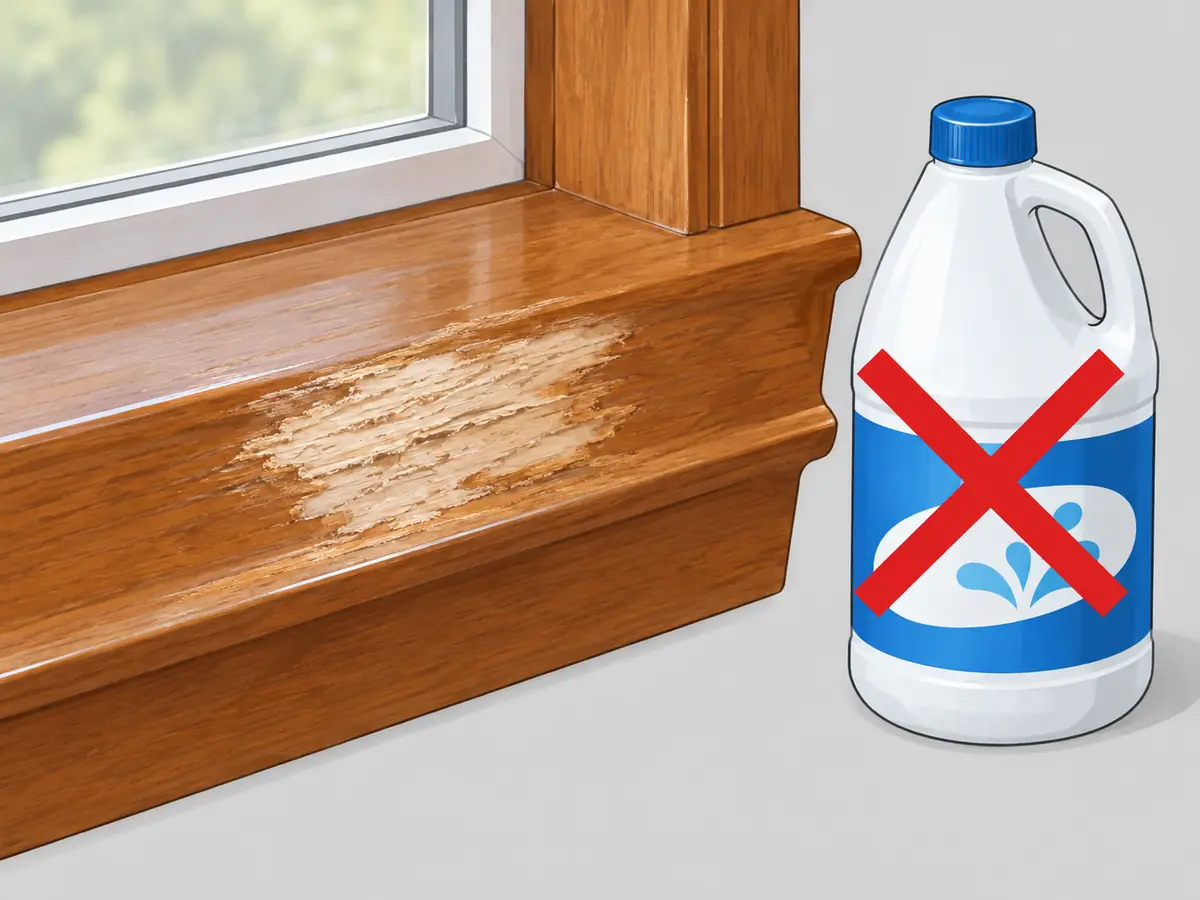
Usually not. Bleach is effective on hard, non-porous surfaces, and some guides recommend it for sills. But most sills are wood, painted wood or MDF, and bleach can lighten, raise the grain or soften them. The EPA does not recommend bleach as a routine part of mold cleanup. If you use a bleach product on a vinyl or tiled sill, follow the label, ventilate the room, rinse well, and never mix it with vinegar or ammonia.
How to Remove Mold From Different Window Sills
Wooden window sills
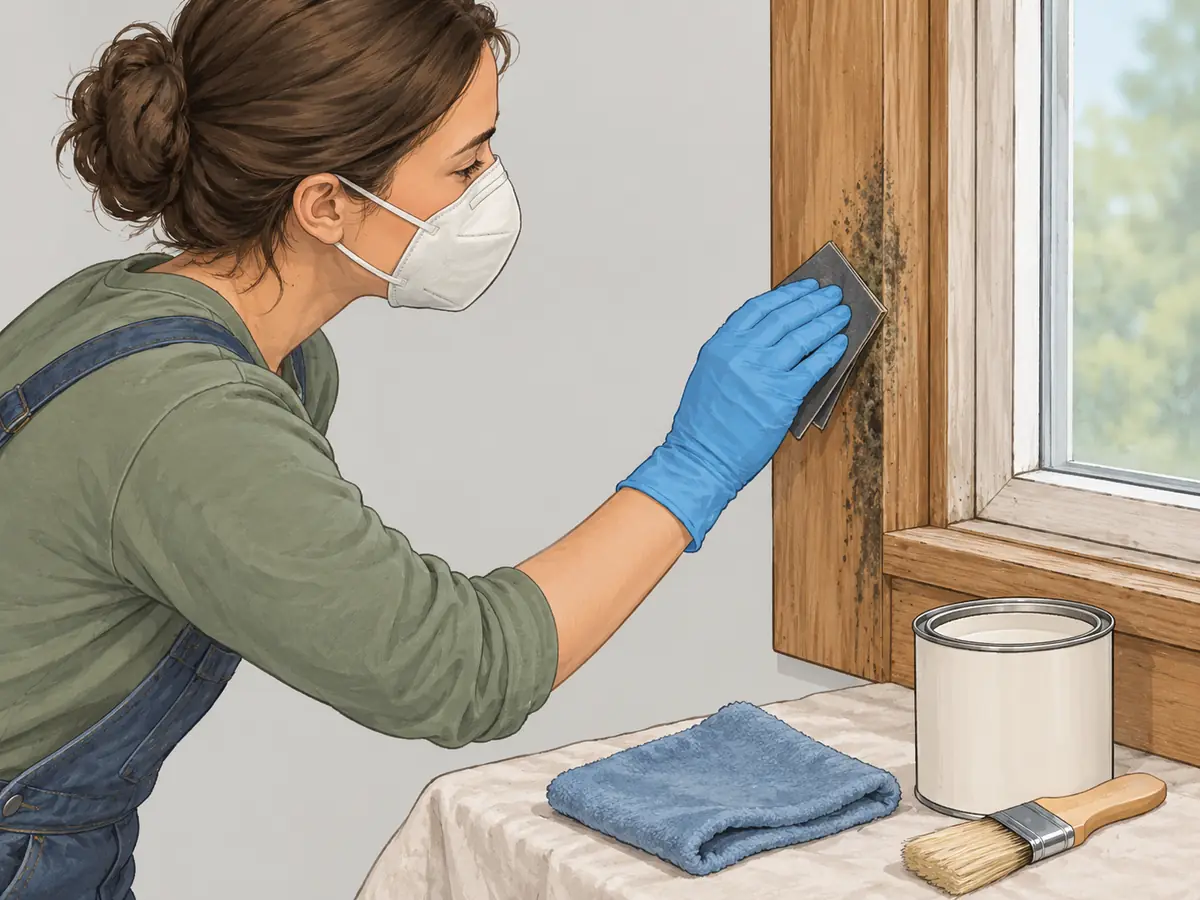
Wooden sills are the most likely to have mold growing into the surface, especially where paint or varnish is worn. Clean with vinegar on a damp cloth, then dry. If dark marks remain after two cleans, the mold has stained the wood. Let it dry for a day, then sand lightly with 120 to 180 grit sandpaper while wearing a mask, wipe off the dust with a damp cloth, and reseal with primer and paint or a clear varnish. Soft, spongy wood is rot. Small areas can be dug out and filled with two-part wood repair epoxy. Large areas mean a new sill.
Painted window sills
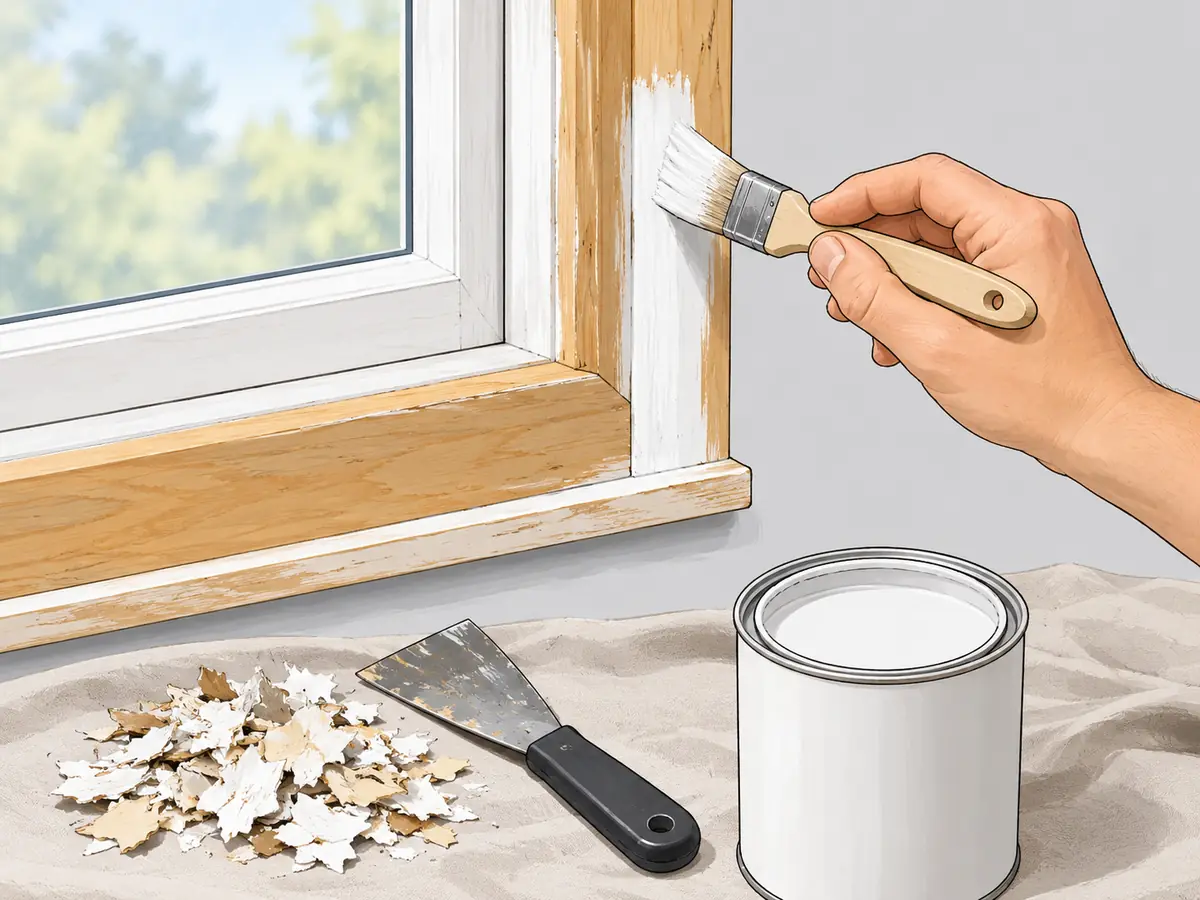
Clean painted sills gently with mild dish soap and a soft cloth. Strong solvents, including rubbing alcohol, can soften or lift some paints. Blistering, bubbling or peeling paint is a sign of moisture underneath. Scrape the loose paint (test for lead first in homes built before 1978), clean, let the sill dry completely, prime with a stain-blocking primer and repaint. Never paint over mold.
Plastic, vinyl and uPVC window sills
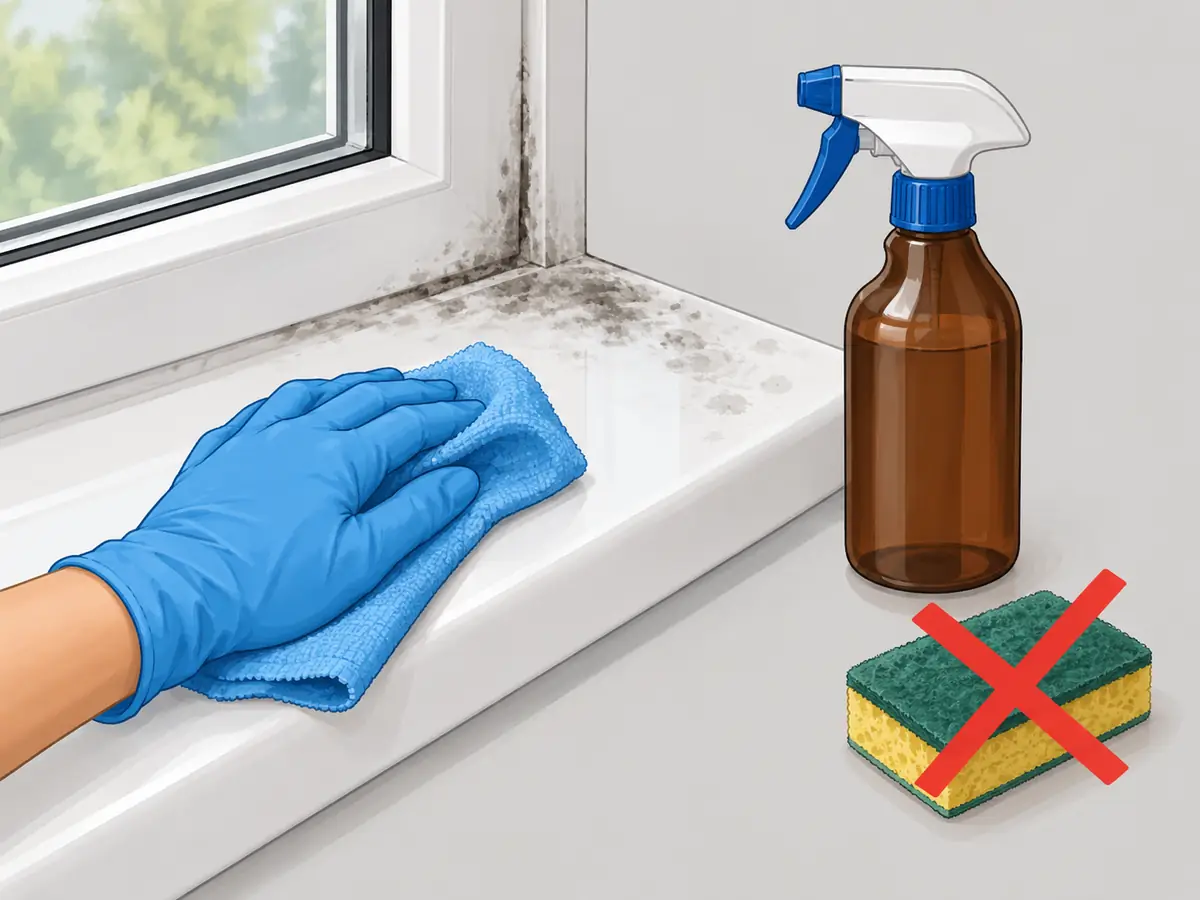
Plastic sills do not absorb water, so mold sits on the surface and wipes off easily with vinegar, soapy water or hydrogen peroxide. Grey shadows left after cleaning are staining, not live mold. A dedicated uPVC cleaner or a second pass with hydrogen peroxide usually lifts them. Do not use scouring pads, which scratch and dull the surface so it holds dirt and mold faster.
Marble and stone window sills
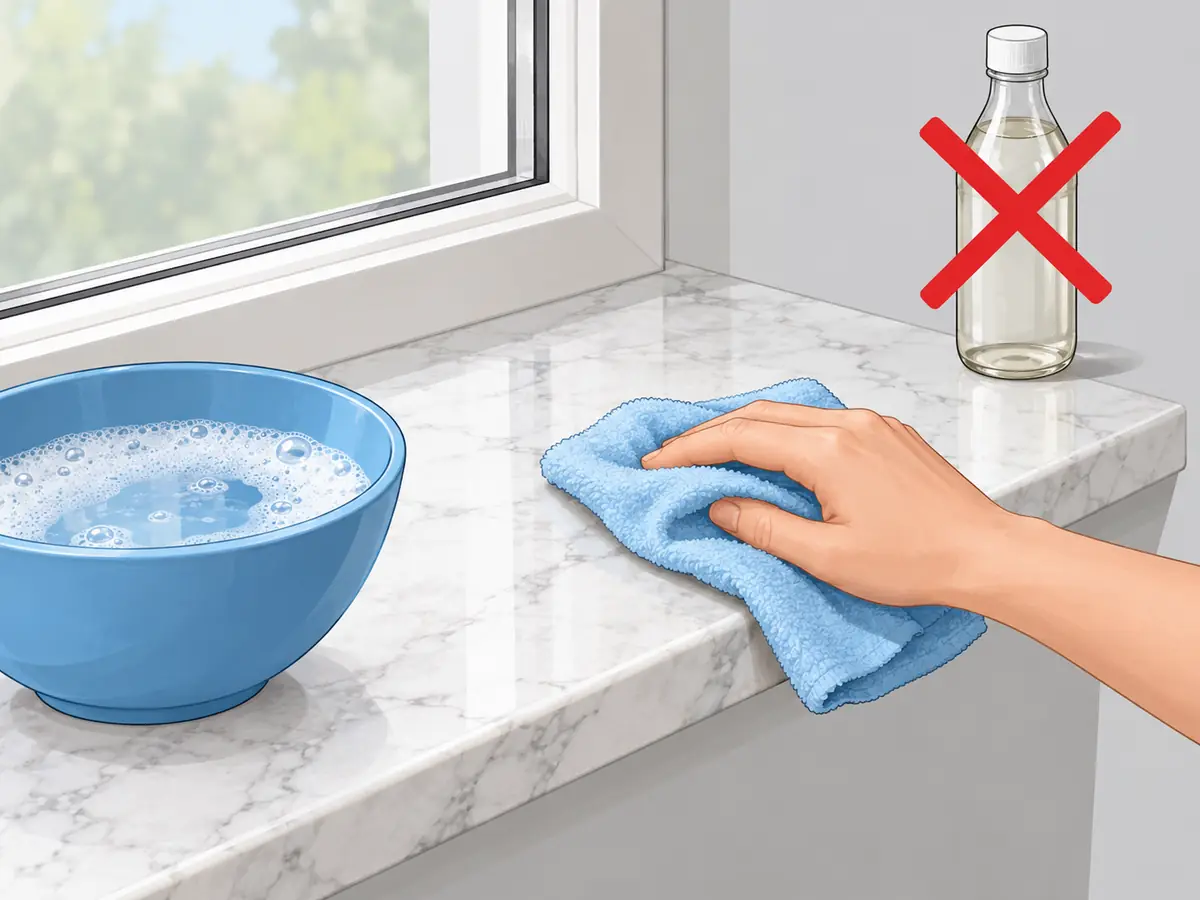
Marble, limestone and travertine are calcium-based and are etched by acids, including vinegar and lemon juice. Clean them with warm water and a few drops of mild dish soap, or a cleaner labeled safe for natural stone. For stubborn spots, use a soft brush and patience rather than stronger chemicals. Dry thoroughly. Reseal stone sills every year or two so water cannot soak in.
Tiled window sills
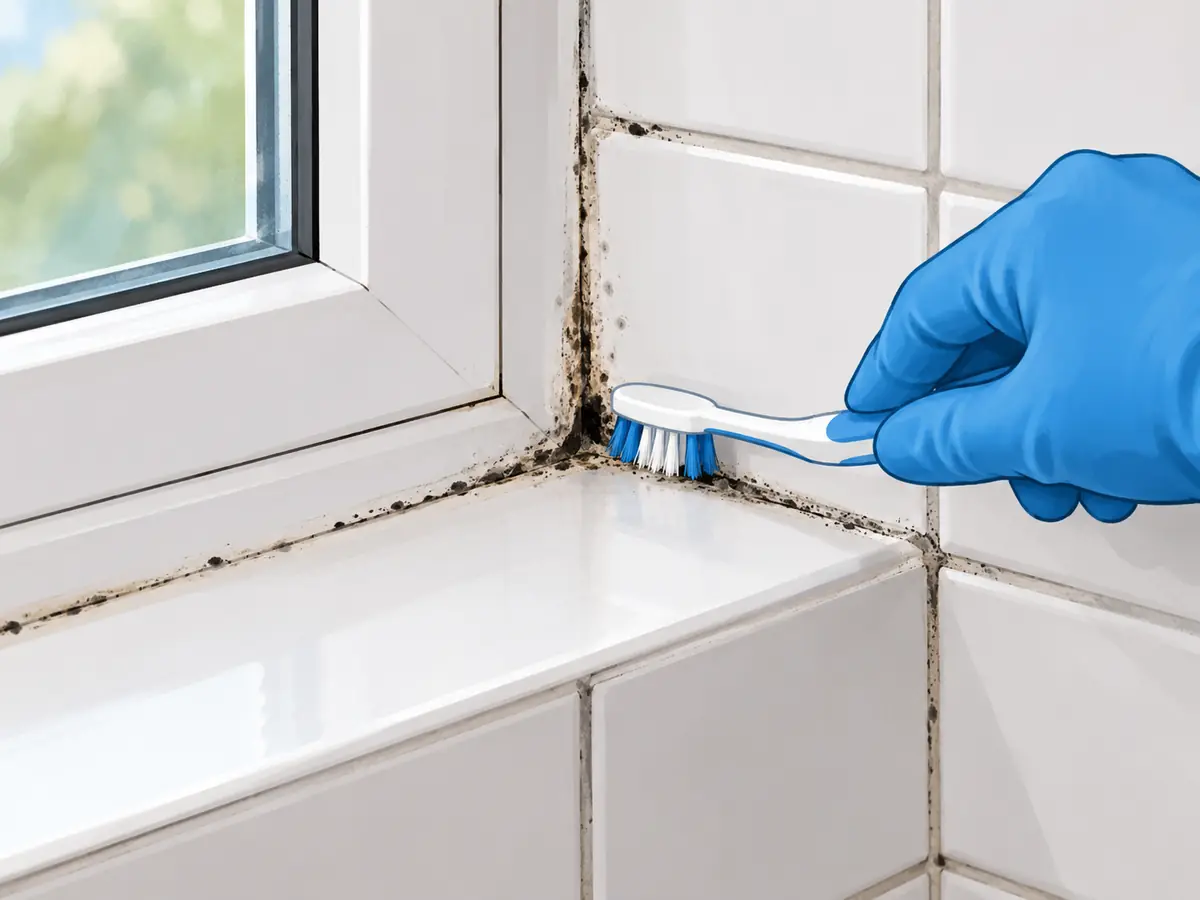
Mold on tiled sills, common in bathrooms, usually grows in the grout and the silicone joint against the window frame. Scrub grout with vinegar or hydrogen peroxide and a toothbrush. If black marks stay inside the silicone after cleaning, cut it out, dry the joint, and apply new mold-resistant silicone.
MDF window sills
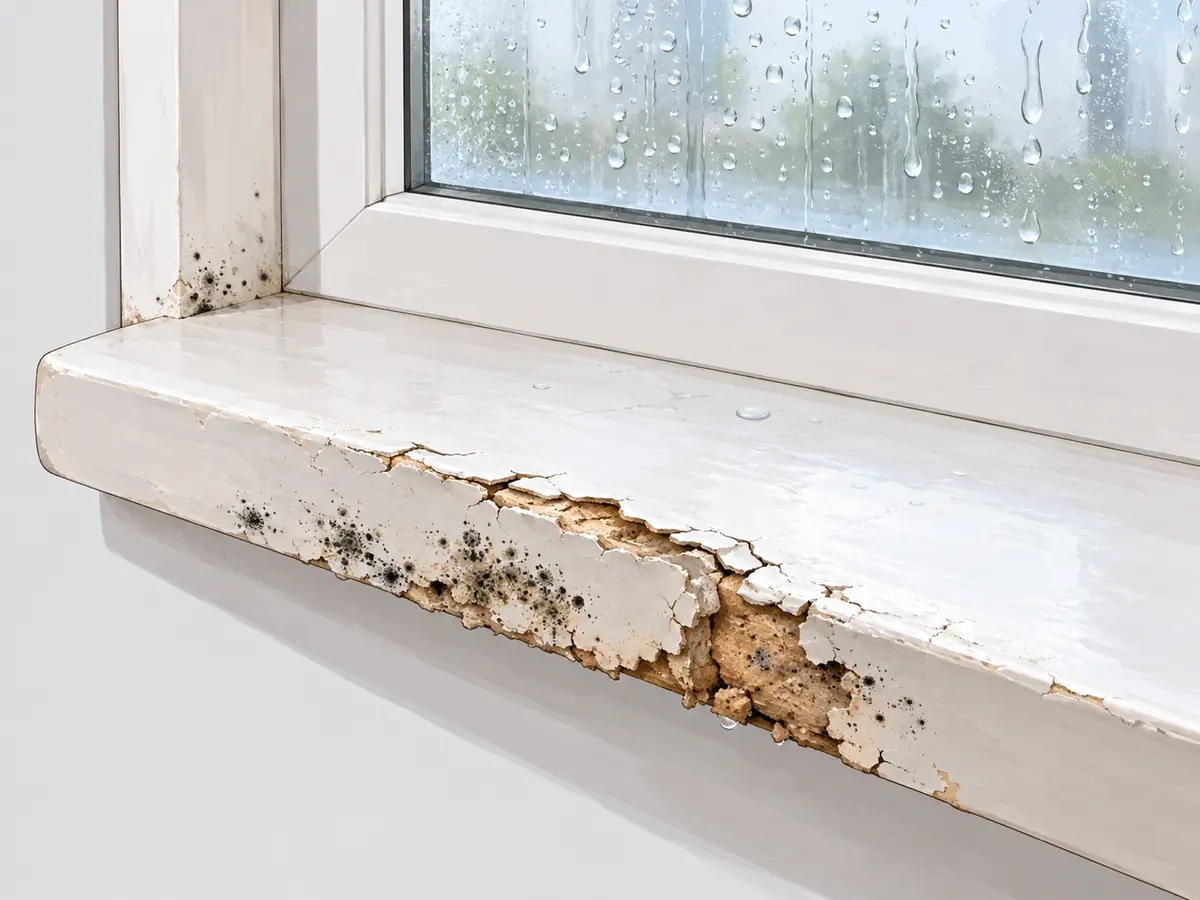
MDF swells and crumbles when it stays wet, and mold grows quickly once the paint seal is broken. Clean with a barely damp cloth and dry immediately. A swollen or soft MDF sill cannot be repaired properly; replace it, ideally with a moisture-resistant material.
Black Mold, Stains and Hidden Sill Mold
Black mold on window sills
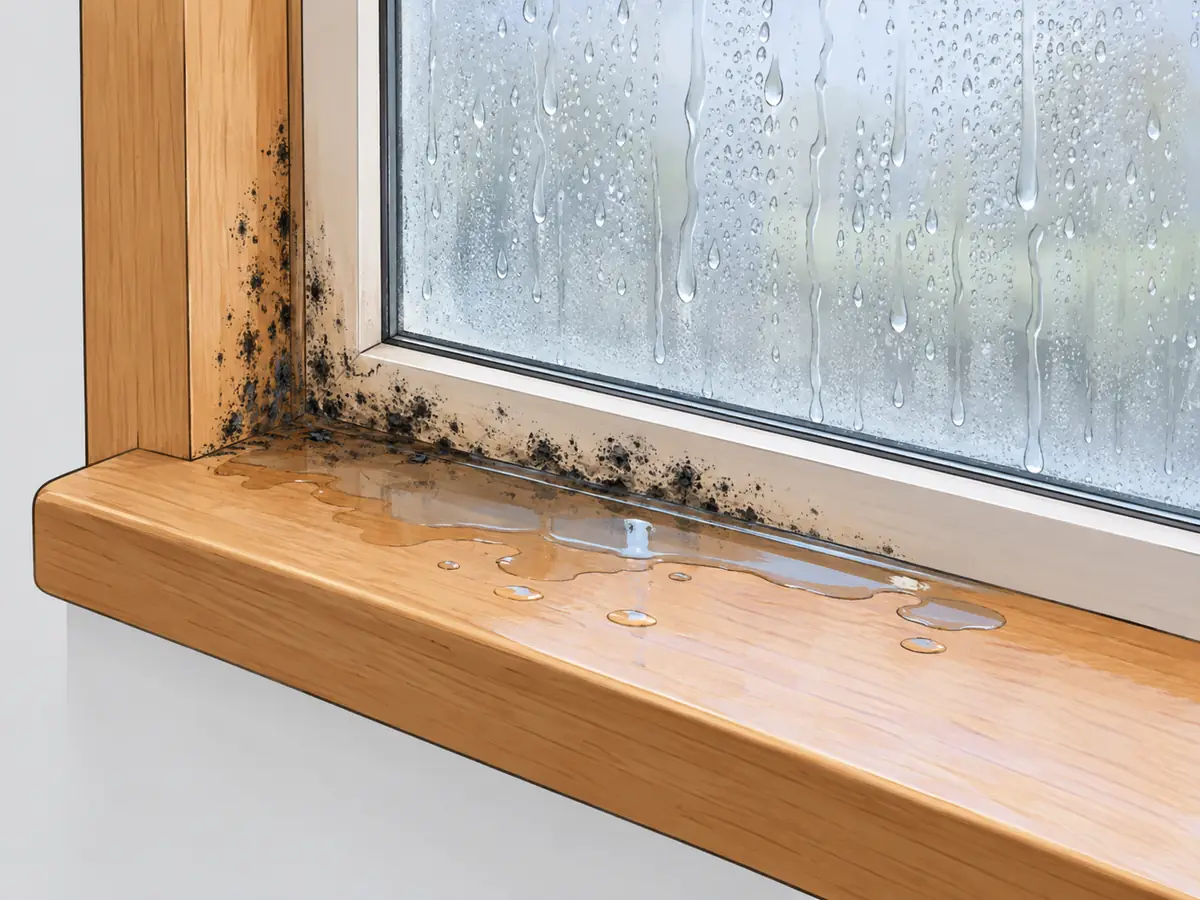
Black mold on a sill is cleaned with the same steps above. It tends to grip harder in corners and wood grain, so leave the cleaner on longer, scrub with a toothbrush, and expect a second clean. If it returns within a few weeks, the sill is staying wet, and you need to fix the moisture rather than clean harder.
Mold stains that will not come off
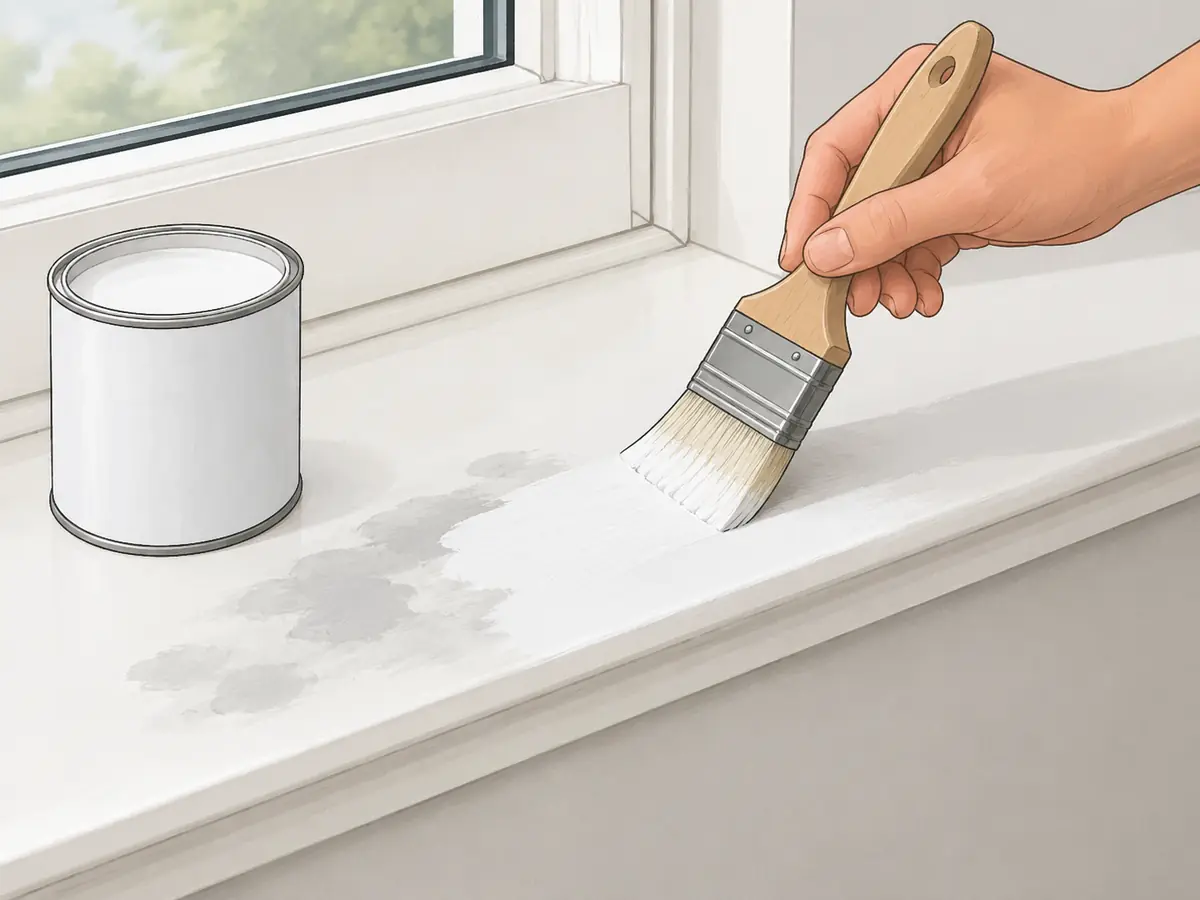
Once mold is gone, dark shadows often remain. On vinyl, try 3% hydrogen peroxide. On bare wood, light sanding removes surface staining. On painted sills, a stain-blocking primer and a fresh coat of paint cover marks once the sill is clean and dry. If staining keeps spreading, the mold is still active.
Mold in the corners of the sill
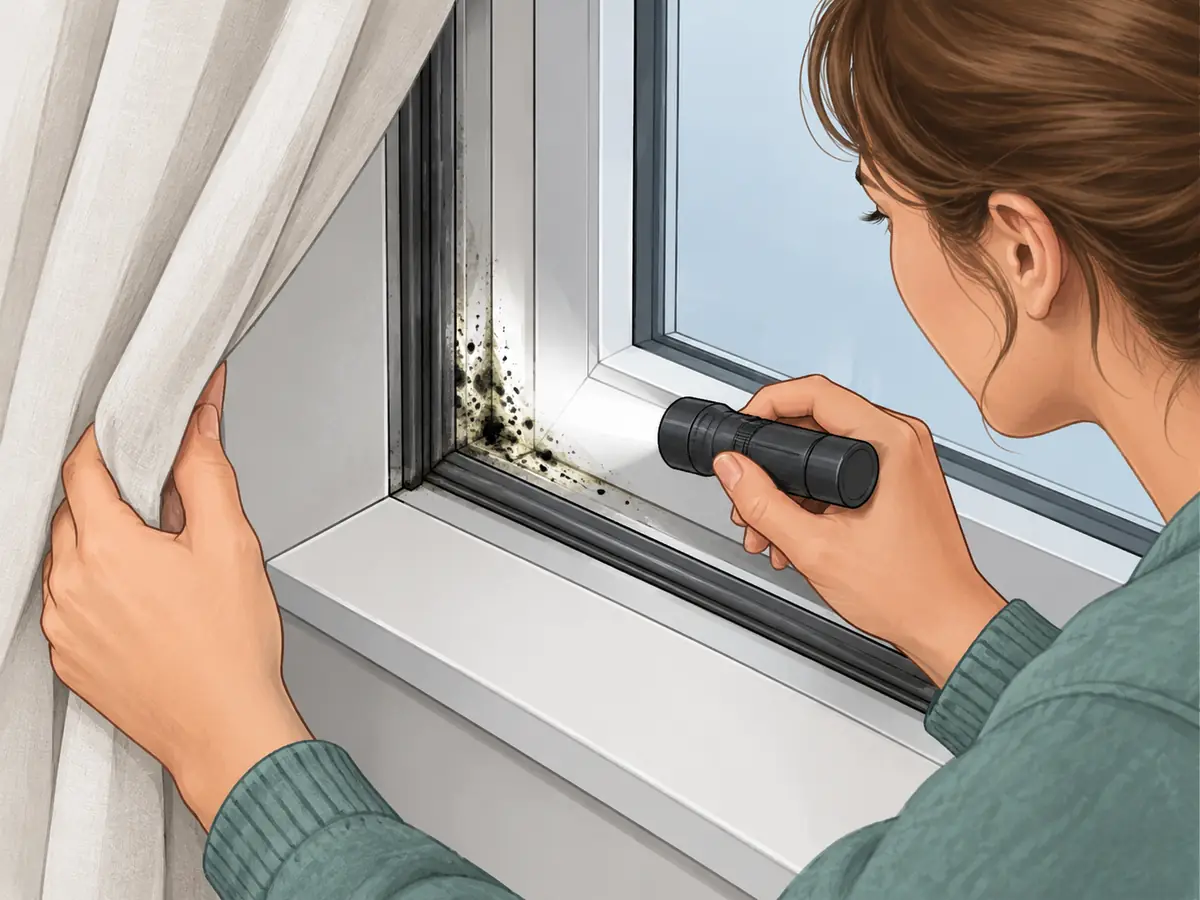
The back corners, where the sill meets the frame and the side walls, collect the most water and the least airflow. Clean them with a toothbrush and a cloth wrapped around a putty knife, and check the caulk in the corner. Cracked caulk lets water run behind the sill.
Mold under the window sill
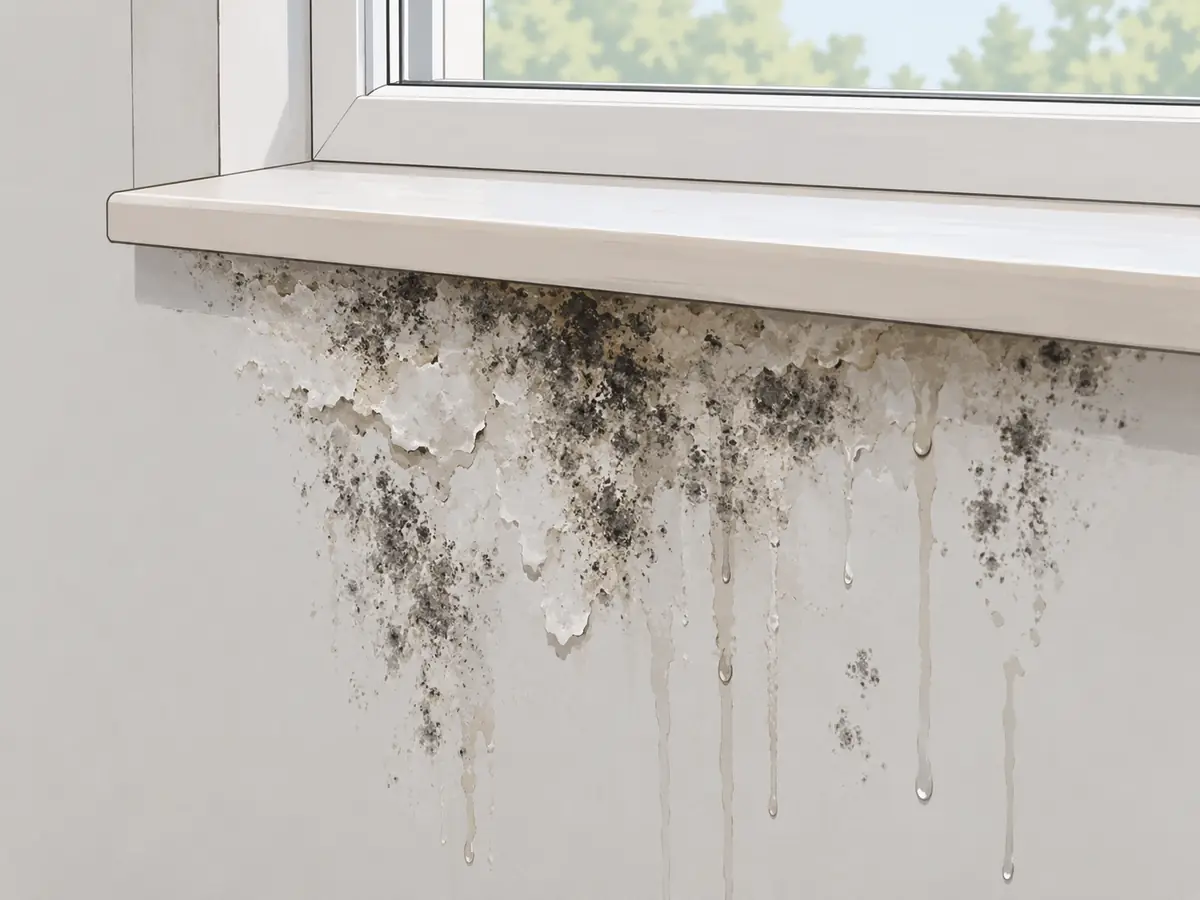
Mold on the wall directly under a sill, or under the front lip, usually means water is getting behind or below the sill. That can be condensation running off the back edge, a gap in the caulk, or rain getting in from outside. Clean the visible mold, then check the caulk and the outside of the window. If the wall below is soft or the paint is bubbling, the water is inside the wall and needs a professional.
Mold on the window sill after rain
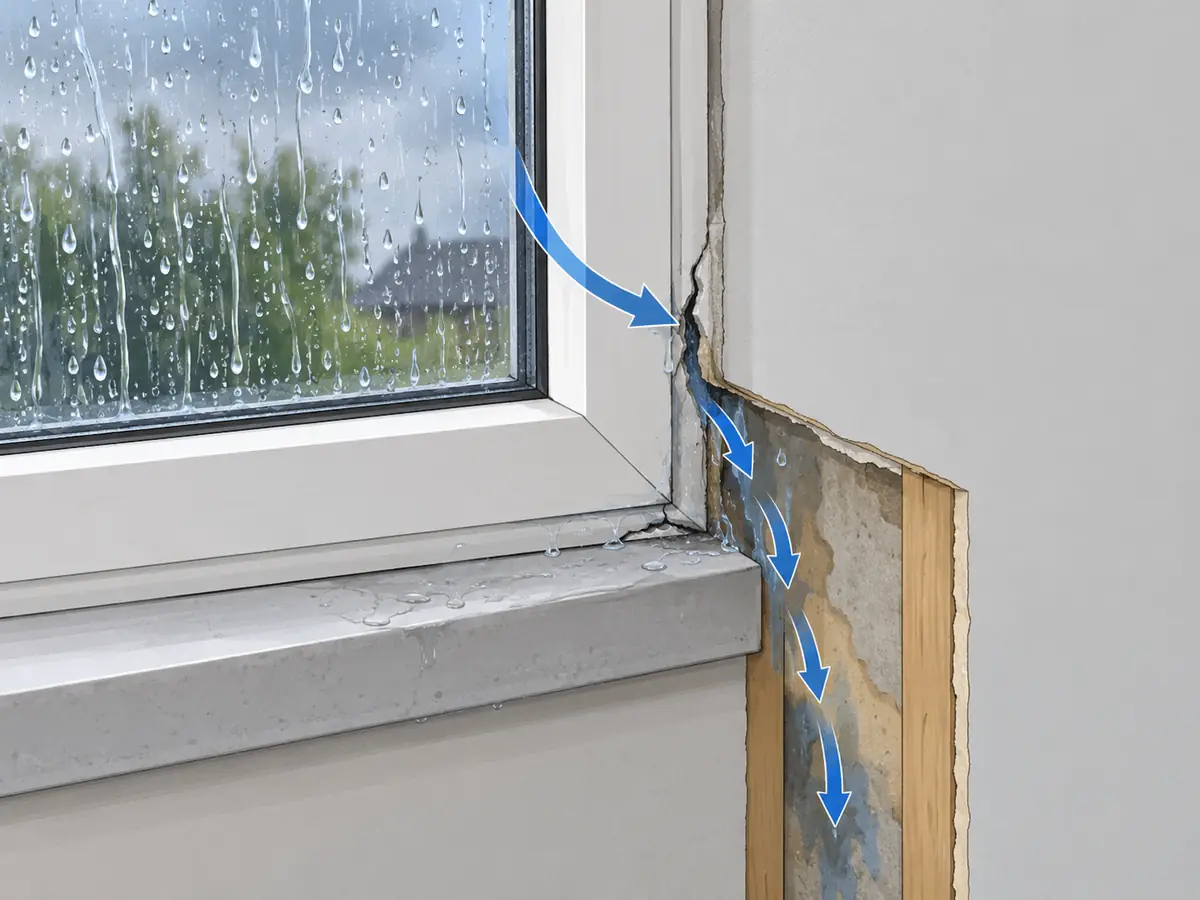
If mold or water appears on the sill after rain, not after cold nights, the cause is a leak, not condensation. Check the outside caulk around the frame, the drainage holes at the bottom of the outer frame, and the flashing above the window. Cleaning will not keep up with a leak.
Why Do Window Sills Get Moldy?
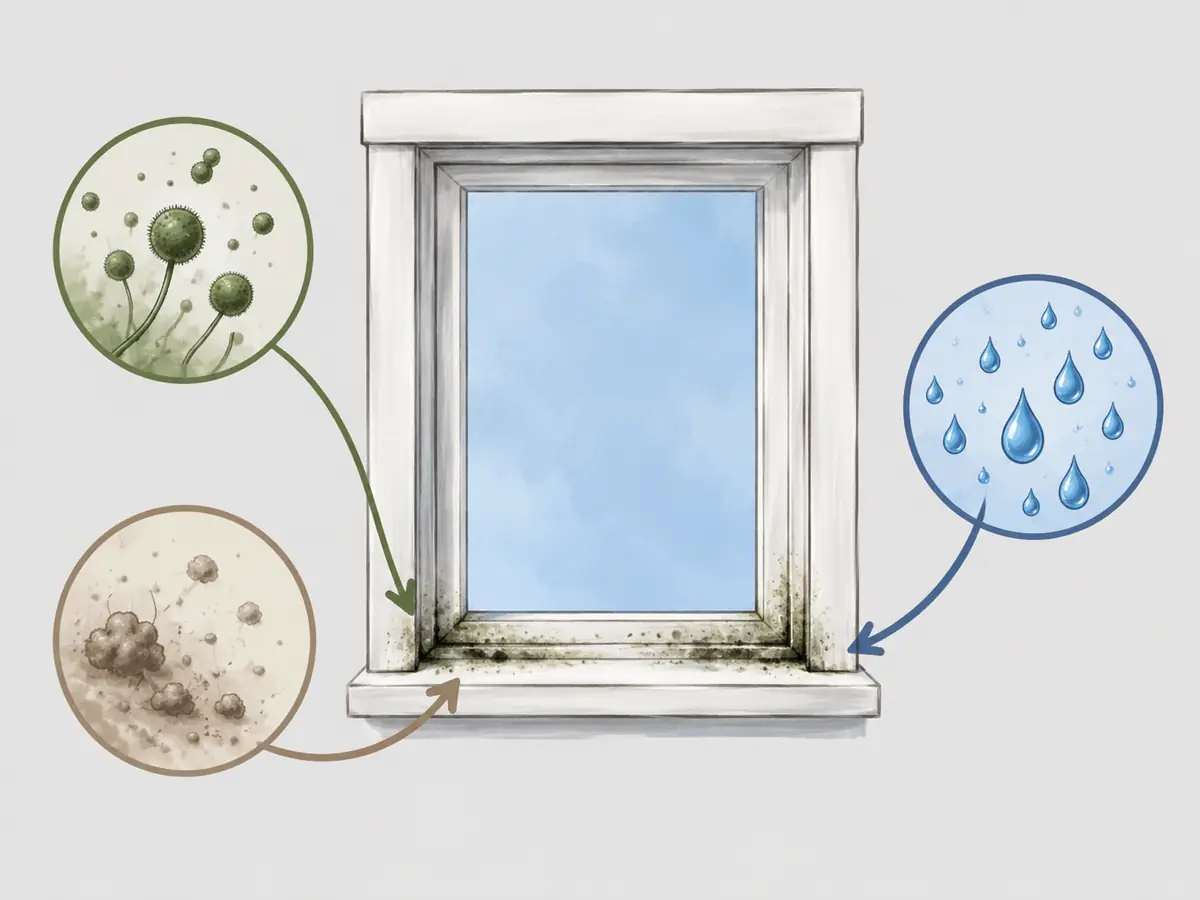
Condensation running off the glass
In cold weather, warm, humid indoor air turns into water on the cold glass. It runs down and pools on the sill overnight. This is by far the most common cause.
The sill never dries
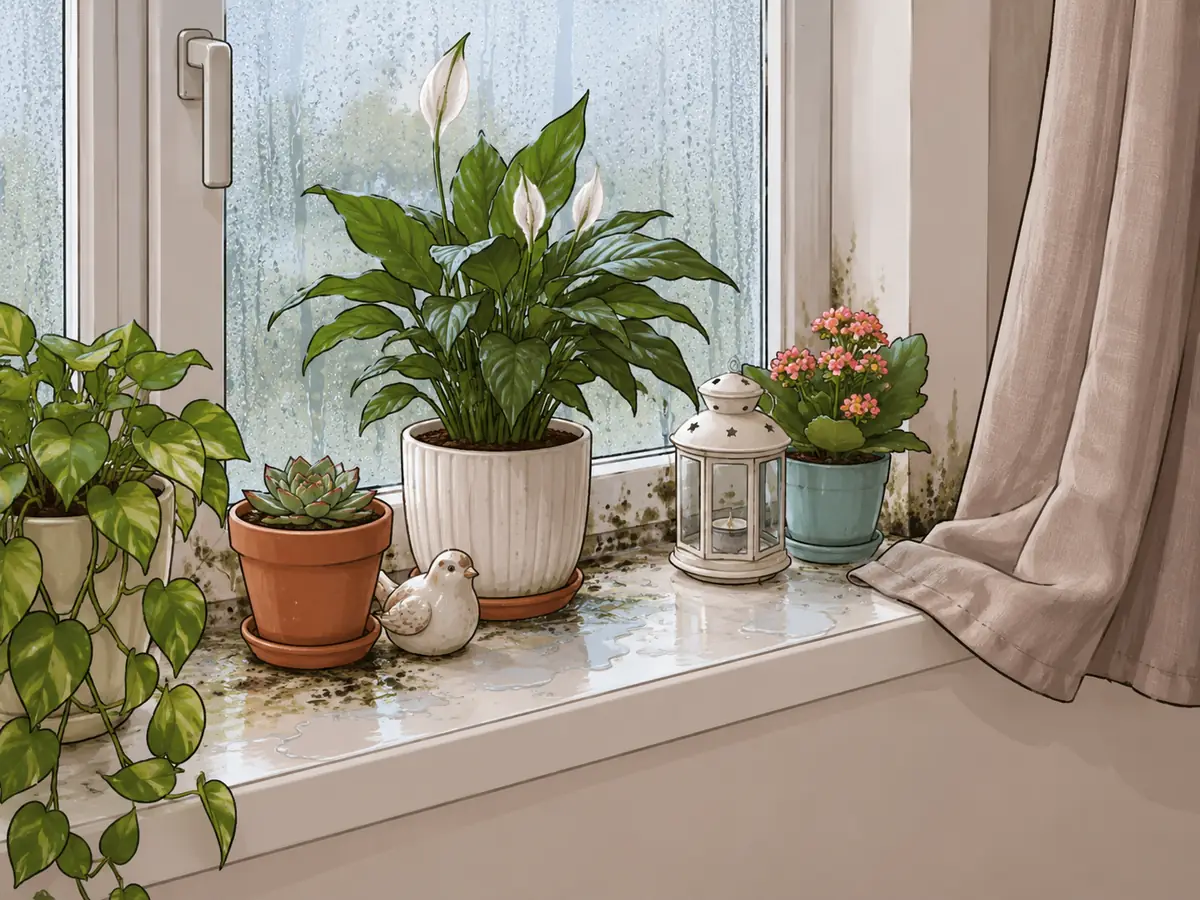
Plants, ornaments, curtains resting on the sill, and closed blinds all trap moisture and block airflow, so the sill stays damp all day.
Damaged paint, varnish or caulk
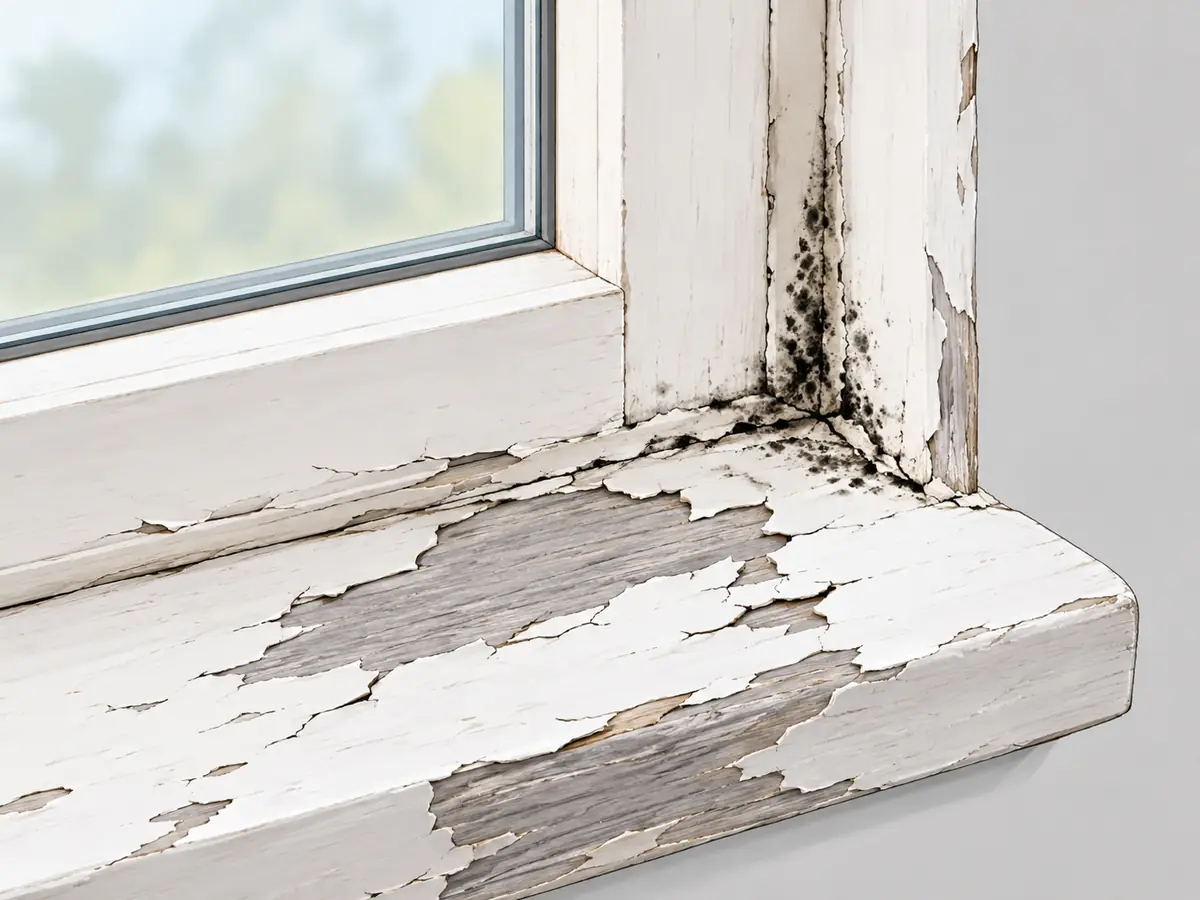
Once the protective finish wears through, water soaks into wood and MDF, and mold grows into the surface instead of on it.
Leaks from outside
Failed outside caulk, blocked drainage holes and missing flashing let rain into the sill and the wall below.
High indoor humidity

Cooking, showering, drying laundry indoors and poor ventilation raise indoor humidity, which means more condensation on the glass and more water on the sill.
How to Prevent Mold on Window Sills
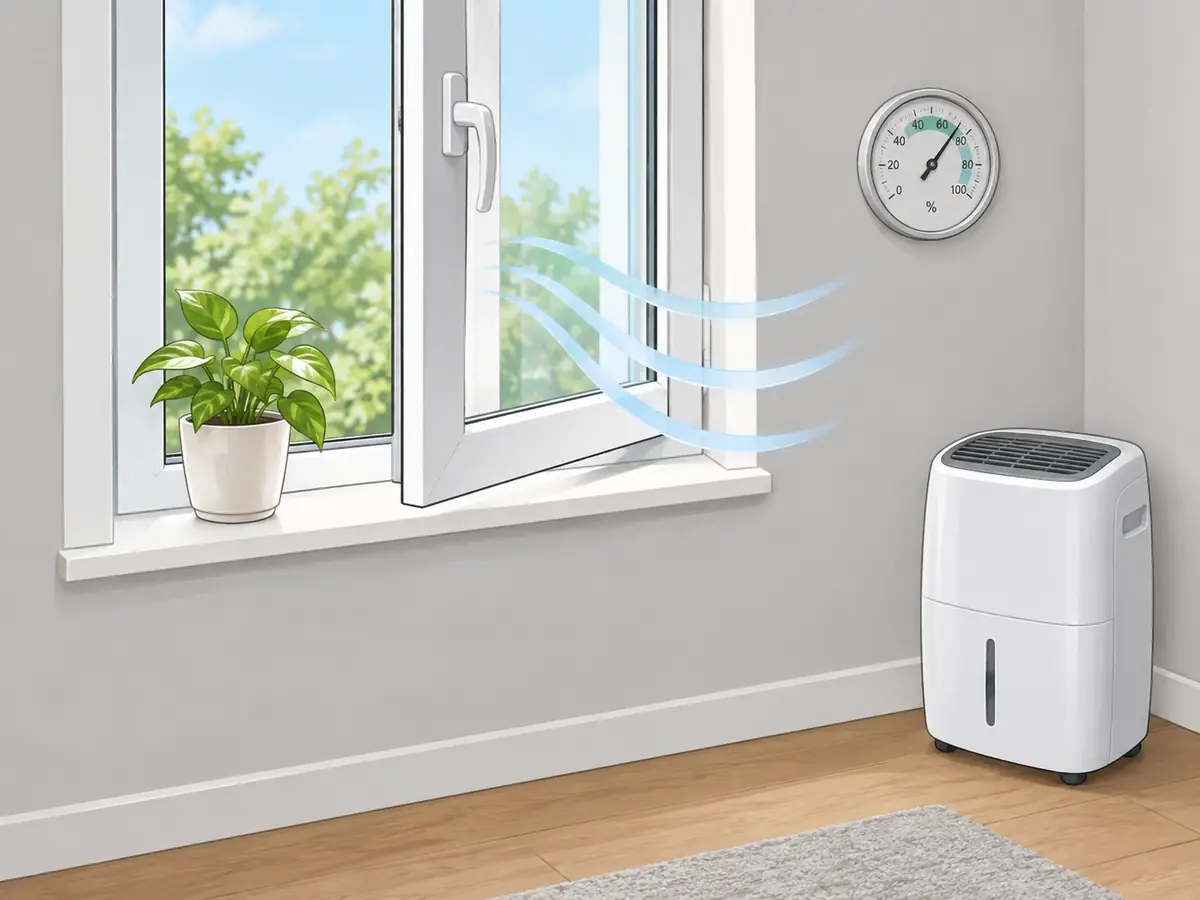
Wipe the sill every morning in cold weather
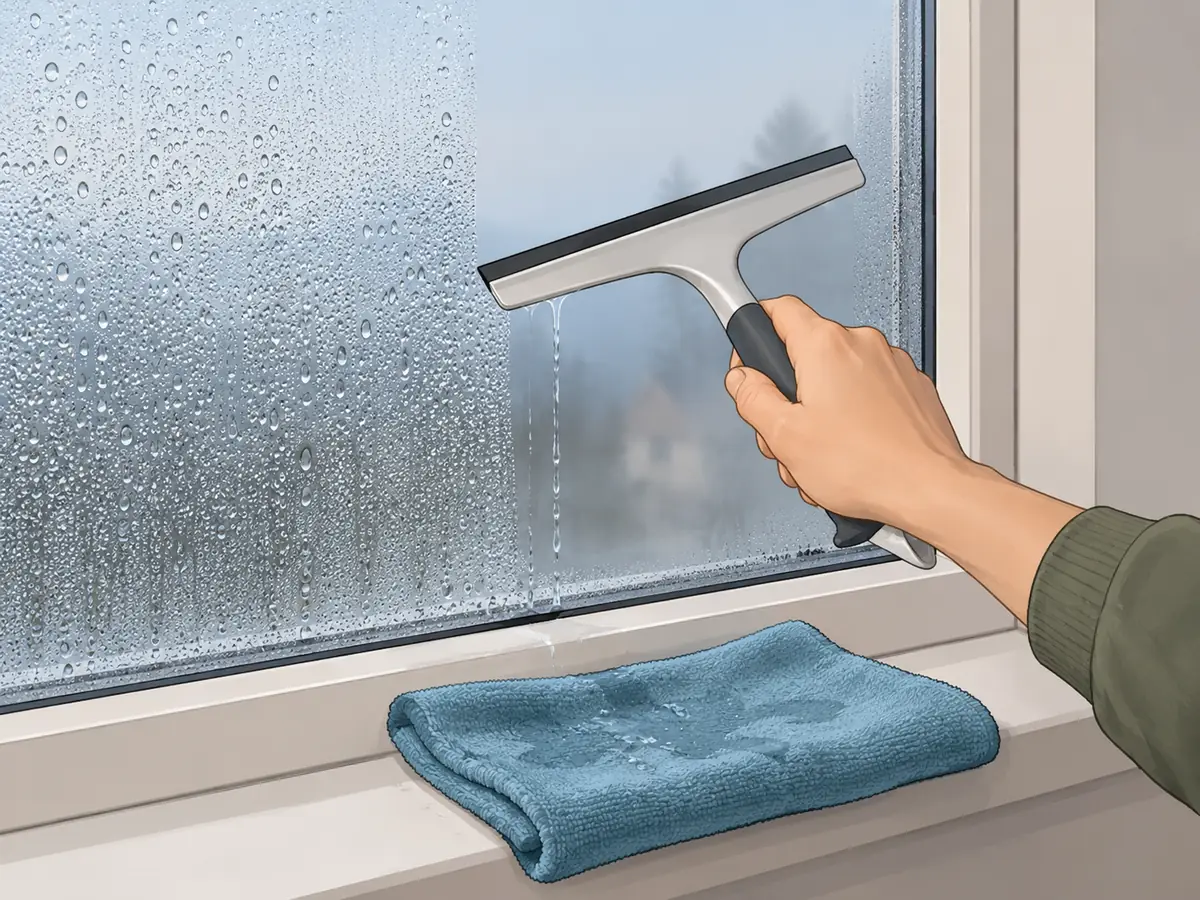
Keep a microfiber cloth or a small squeegee by the window and wipe the glass and sill each morning. It takes 30 seconds and removes the water mold needs.
Lower indoor humidity

The EPA recommends keeping indoor humidity below 60%, ideally between 30% and 50%. Use exhaust fans, open windows briefly each day, and run a dehumidifier in damp rooms.
Keep the sill clear and let air reach it

Move plants and ornaments off the sill in winter, and keep curtains and blinds a few inches away from the glass so warm air can circulate.
Use moisture-absorbing window strips
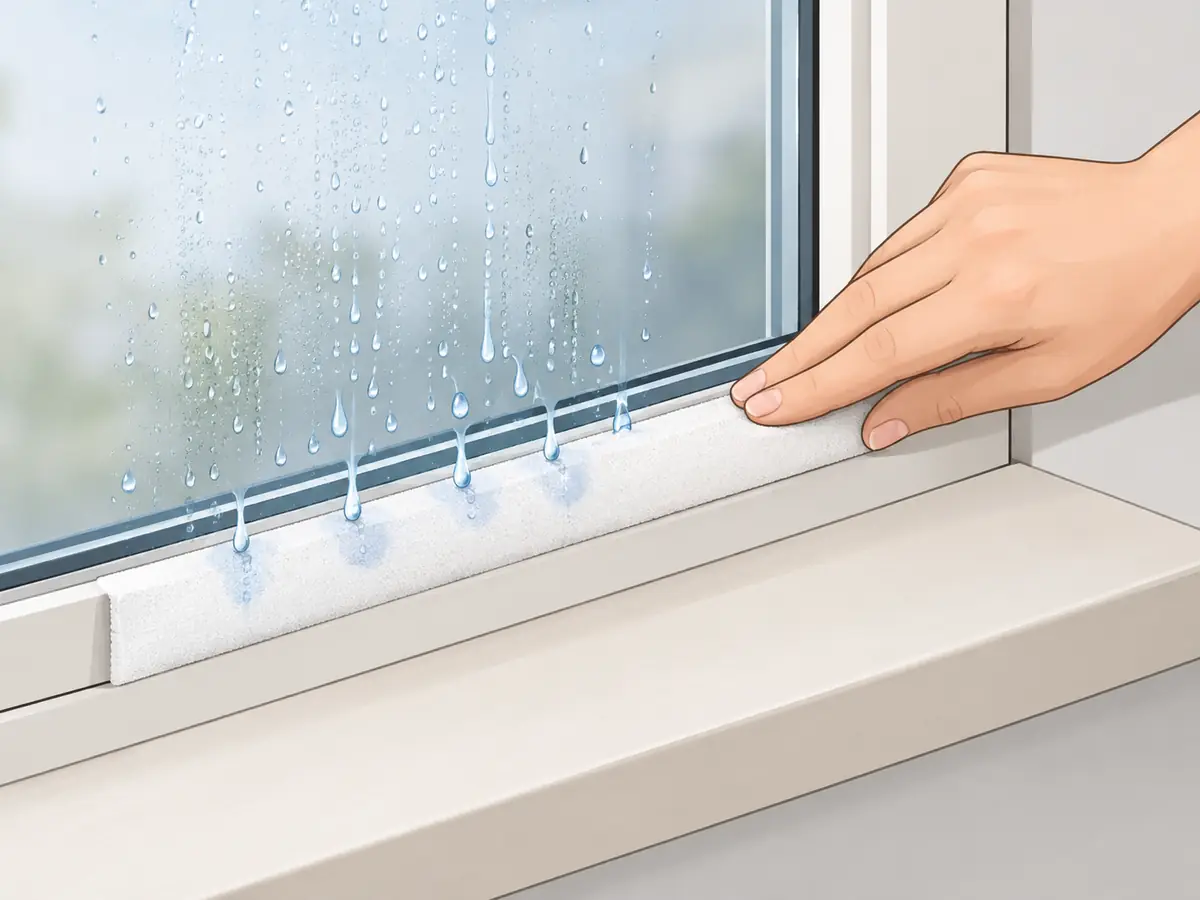
Absorbent strips stuck along the bottom of the glass catch condensation before it reaches the sill. Replace them when they are saturated.
Seal and protect the sill surface
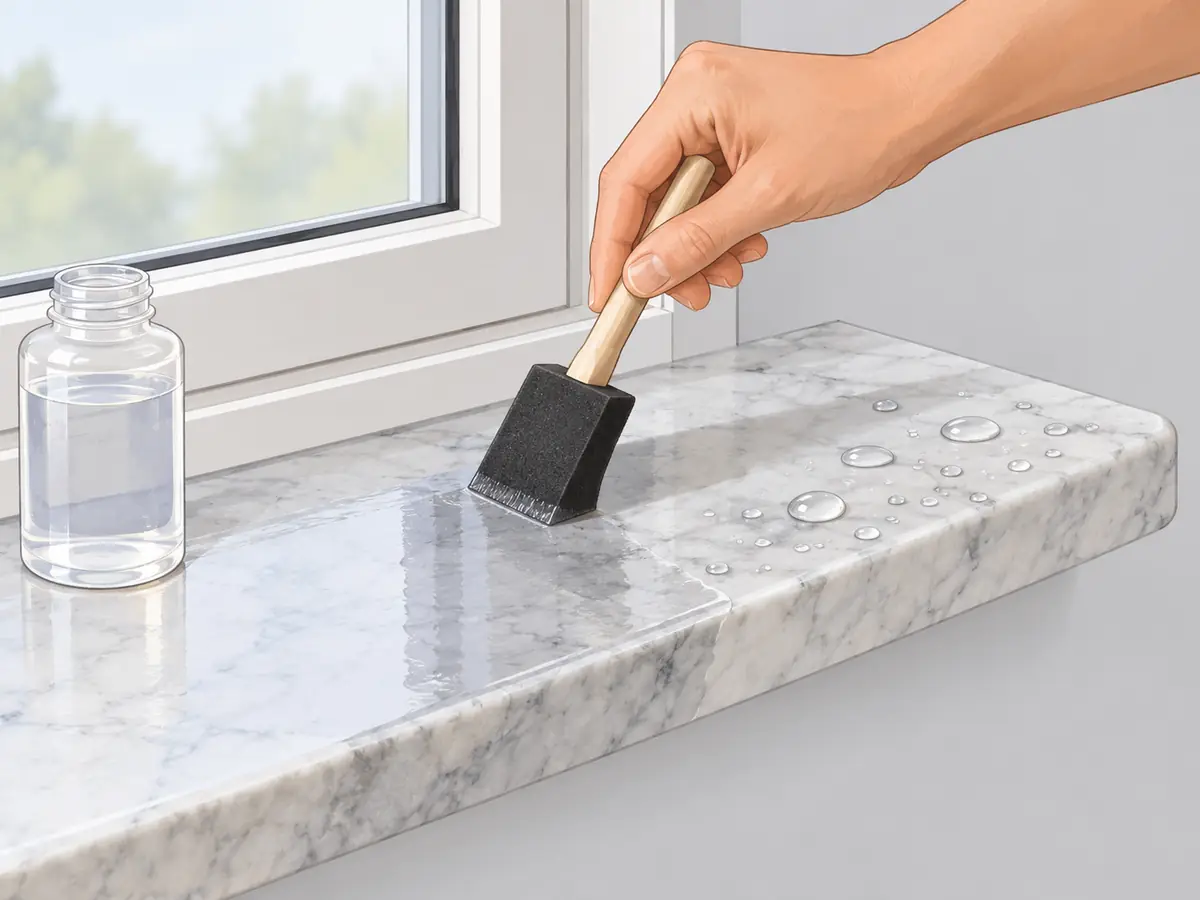
Keep paint and varnish in good condition, and reseal stone sills every year or two. A sound finish stops water soaking in.
Check the caulk and outside of the window
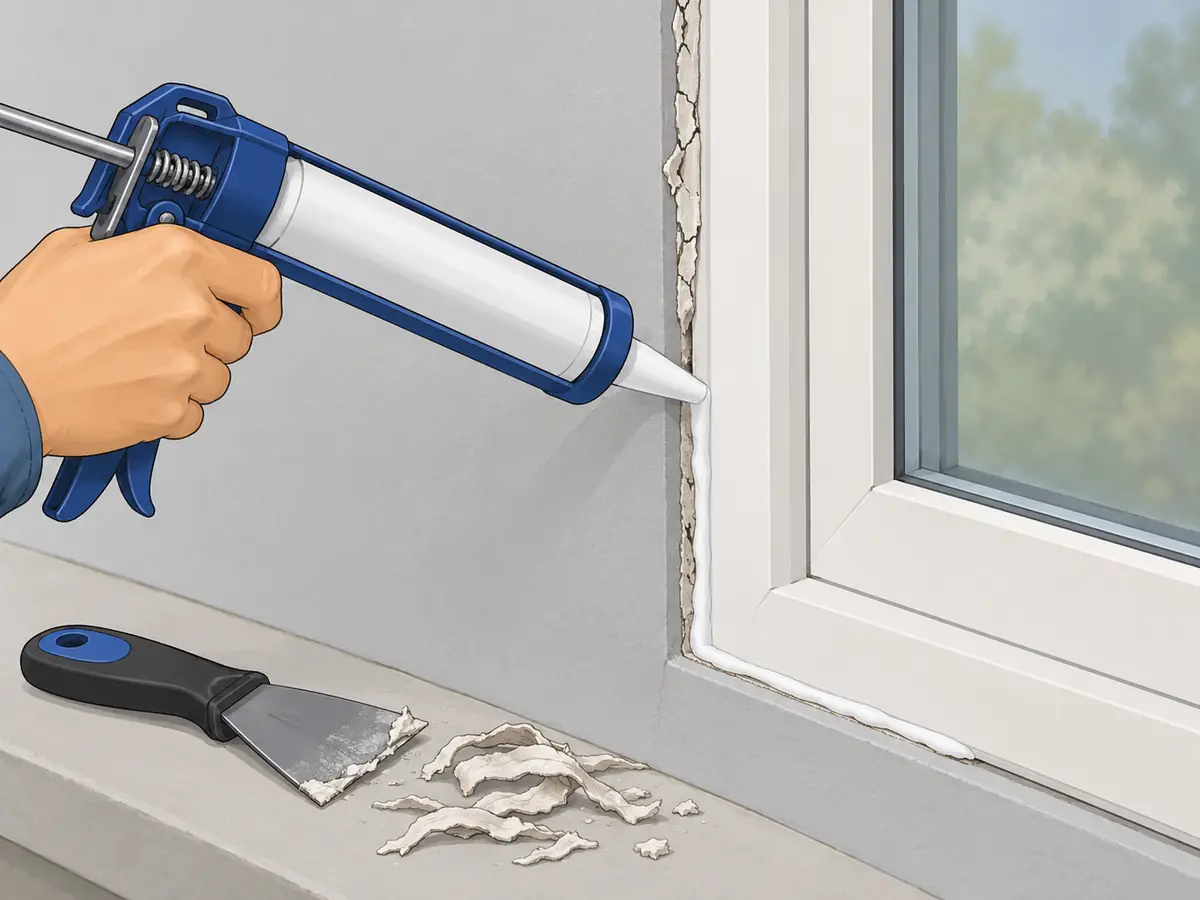
Inspect the caulk around the sill inside and out once a year, and clear drainage holes. Replace cracked caulk before winter.
When sill mold keeps coming back

If mold returns within 2 to 4 weeks after a thorough clean, the moisture is winning. Measure humidity, check for leaks, consider a dehumidifier, and if the glass runs with water every morning despite good ventilation, the window itself may need upgrading.
When to Replace a Moldy Window Sill
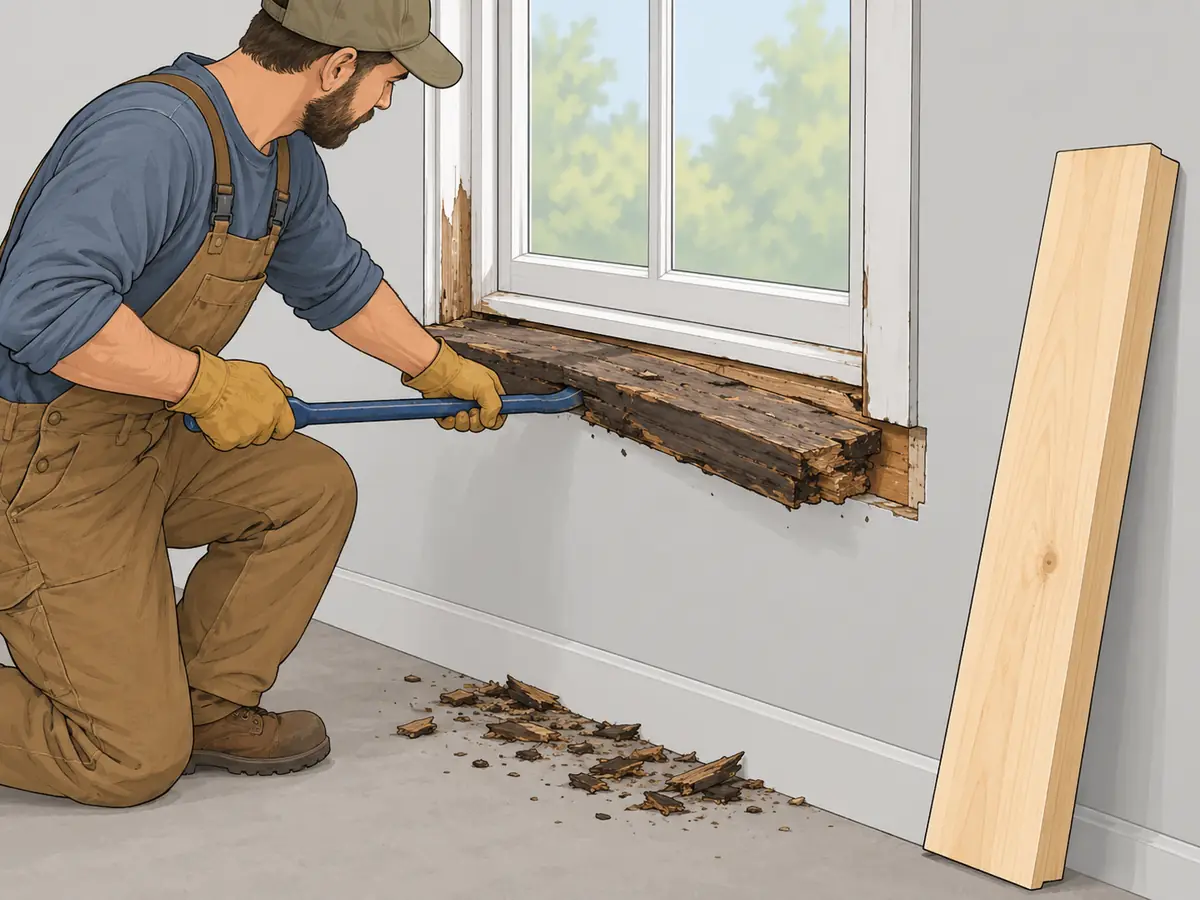
Replace the sill, or have it assessed, when:
- The wood is soft, spongy or crumbles under a screwdriver
- An MDF sill has swollen or lost its shape
- Mold keeps returning through fresh paint
- The sill is loose or water is running behind it
- The wall under the sill is soft, stained or bubbling
A carpenter can replace a sill without replacing the whole window. If the wall underneath is damaged, a mold remediation professional should check inside it first.
Frequently Asked Questions
What is the best way to remove mold from window sills?
Spray white vinegar or soapy water on the sill, leave it for 10 to 60 minutes, scrub the corners with a soft brush, wipe with a damp cloth, and dry the sill completely. Use soapy water on marble and stone.
Does vinegar kill mold on window sills?
Yes. Undiluted white vinegar or a 4 to 1 mix with water removes mold from wood, painted, vinyl and tiled sills. Leave it on for up to an hour before scrubbing. Do not use it on marble or limestone.
How do you clean mold off a wooden window sill?
Wipe with vinegar on a damp cloth, scrub gently, and dry immediately. Sand lightly to remove deep stains, then reseal. Soft or crumbling wood is rot and needs repair.
Can you paint over mold on a window sill?
No. Mold grows back through paint. Clean it off, dry the sill fully, prime with a stain-blocking primer, then paint.
Why does mold keep coming back on my window sill?
Water keeps sitting on it, usually condensation from the glass, sometimes a leak. Wipe the sill every morning, lower humidity, keep the sill clear, and check the caulk.
Is mold on window sills common?
Yes, very common in cold, humid weather. Common does not mean harmless, so clean it promptly and reduce the moisture.
What is the white mold on my window sill?
White, powdery growth is usually mildew or early mold, and it cleans off the same way. White crystals on a stone sill or the wall below may be efflorescence, a salt deposit left by water moving through masonry.
How do you get rid of mold under a window sill?
Clean the visible mold, then find how water is getting under the sill, usually cracked caulk, condensation running off the back edge, or an outside leak. If the wall below is soft or stained, call a professional. ---
Final Word: A Dry Sill Is a Mold-Free Sill
Window sill mold is a water problem. Clean it with the right product for your sill, get into the corners and the frame joint, and dry everything thoroughly. Then keep the sill dry: wipe it in the morning, clear it of clutter, lower the humidity and fix any leaks. A sill that dries every day does not grow mold.